
Aron Calvin Vijaykhar
Global Product Manager | Marketing & Brand Management Head
The change in people’s attitude towards food production has been immense over the last ten years. The emphasis has changed from how much can be grown to how it can be grown. Here, farming and sustainable agriculture intersect. With climate change, soil degradation, and water scarcity posing a threat to the planet, sustainable farming practices are no longer a fringe concept but a global necessity.
So, what is sustainable agriculture? It is not merely a regression to old-fashioned farming. It is an intelligent combination of old and new knowledge. It aims to satisfy current food and textile needs without compromising the capacity of future generations to achieve the same.
No matter whether you are a student doing a sustainable agriculture essay or a person who wonders where your food is produced, it is important to know these methods. We identify 15 practices that are characteristic of sustainable agriculture meaning, and how they are transforming food production, below.
1. Crop Rotation and Diversity
One of the most effective and old-time sustainable agriculture methods is crop rotation. Cultivating the same product in the same location year after year depletes soil nutrients and attracts pests. Farmers naturally replenish nitrogen and pest cycles by rotating crops, e.g., legumes one year and grains the next. This will enhance biodiversity and decrease the use of chemical fertilizers.
2. Permaculture
Permaculture is a pattern that imitates nature. It is more than mere farming; it is an ideology of sustainability and agriculture in collaboration. Permaculture layouts are as efficient as possible and produce the least wastage. An example is planting taller trees to cover more minor crops or natural slopes to channel water, which would result in a self-sustaining ecosystem that would require minimal human intervention in the long run.
3. Cover Crops
Bare soil is also prone to erosion. Cover crops like clover or mustard protect the soil when the main crop is not growing. They:
- Provide natural nitrogen
- Improve water infiltration
- Reduce weed pressure
These are classic sustainable agriculture examples where crops do not have a selling purpose; instead, they are used to fertilize the soil. They become green manure when used, replenishing soil organic matter, improving soil structure, and increasing nutrient levels.
4. Reduced Tillage and No-Till Farming
Conventional plowing clears the land but leads to significant soil erosion and the release of carbon into the atmosphere. One contribution of sustainable farming methods is no-till or low-till agriculture. Planting seeds in bare soil helps farmers to maintain soil structure, retain moisture, and allow soil organisms such as earthworms.
5. Integrated Pest Management (IPM)
Blanket use of chemicals is unnecessary, but pests are unavoidable. The IPM is based on long-term pest prevention through a combination of methods: biological control, habitat manipulation, and modified cultural practices. The use of chemical pesticides is the last option. The practices of sustainable agriculture preserve the local wildlife and water resources, as well as protecting crops.
6. Agroforestry
Agroforestry involves trees and shrubs alongside crops or pasture. It integrates forestry and agriculture to develop multifaceted, fruitful, and sustainable land-use regimes. Trees help prevent soil erosion, shelter livestock, and create microclimates that are advantageous to crops.
7. Biodynamic Farming
Biodynamic farming is holistic, ecological, and moral. It considers soil fertility, plant growth, and livestock care as related activities. Like organic farming, biodynamic agriculture also relies on spiritual and astrological methods to determine planting cycles. It depicts how sustainable agriculture views the farm as alive.
8. Hydroponics and Aquaponics
With the increase in urbanization, farming and sustainable agriculture are forced to change to small areas. In hydroponics and aquaponics, plants are cultivated in water, using much less water than in traditional soil-based farming. These systems help reduce soil erosion and fertilizer runoff, making them suitable for sustainable urban agriculture.
9. Natural Pest Predators
Rather than spraying chemicals, the sustainable farmers promote the natural predators. To control rodent populations or to release ladybugs to feed on aphids, they construct bat or owl houses. This biological control does not interfere with the natural balance by using toxins.
10. Soil Enrichment with Compost
Sustainable agriculture is based on healthy soil. Healthy soil is essential for long-term yields. Soil management practices involve adding:
- Compost
- Crop residues
- Vermicompost
- Microbial biofertilizers
This will reduce the use of artificial fertilizers made from fossil fuels and transform waste into a valuable resource, completing the circle of farming.
11. Polyculture Farming
Monoculture is effective among machines but detrimental to nature. Polyculture cultivates multiple crop species in the same area, mimicking natural biodiversity. It renders fields more resistant to weather, pests, and other adverse factors, making it a strong, sustainable farming practice for food security.
12. Drip Irrigating and Water Management
Water scarcity poses a threat to global agriculture. The environmentally friendly, sustainable farming methods focus on water conservation. Drip irrigation applies water to plant roots, thereby minimizing evaporation and runoff by up to 50% compared to traditional sprinklers. Smart water management helps prevent the depletion of local aquifers.
13. Integration of Livestock and Crops
Dissociation of animals and crops is a new development. Their reintegration creates a symbiotic relationship. Animals feed on cover or leftover material, which lowers the amount of food required, and their manure automatically fertilizes the ground. This is the gold standard of regenerative farming.
14. Renewable Energy Integration
The modern sustainable farms are set to achieve energy independence. They also use solar panels to power irrigation pumps, wind turbines to generate electricity, and biomass systems to generate heat. The implications of minimizing the farm’s carbon footprint are the same as those of crop production, which will result in a future intersection of energy technology and agriculture.
15. The Connection to Rural Development
There is a close relationship between sustainable agriculture and rural development. These technologies require more workers and supervision than automation in industries, providing employment and helping restore rural economies. Rural farming practices are sustainable and also retain money in the society by limiting the import of chemicals and seeds.
Conclusion
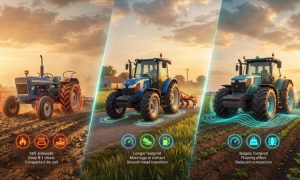
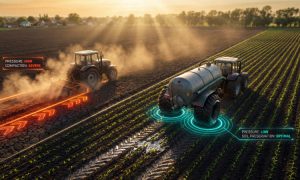
We are so concerned with soil and water, but we forget about the machinery that touches the land. Heavy equipment can smash down the soil, disrupting its structure and preventing roots from growing, which is the same thing sustainable farming is supposed to achieve. Farmers should also make sure their machines do not disturb the earth to ensure true sustainability.
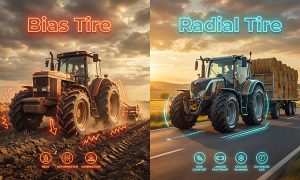
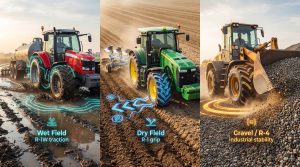
The solution is to select appropriate equipment. This is what TVS Eurogrip OHT agricultural tyres are aimed at. We provide better traction and reduce soil compaction, helping preserve soil structure and efficiency. TVS Eurogrip OHT tyres help farmers ensure heavy machinery does not undermine their sustainability goals.
Frequently Asked Questions (FAQs) on Alignment in Agriculture
What is sustainable agriculture?
Sustainable agriculture is an agricultural practice that aims to cultivate agricultural products and animals in the long term at minimal environmental cost. It seeks to maintain the economic stability of farms and farmers, promote environmental stewardship, and enhance the quality of life for farming families and communities.
What are sustainable farming practices?
Environmental preservation and resource conservation are achieved through sustainable agricultural practices. Some common practices include crop rotation, cover cropping, reduced tillage, integrated pest management (IPM), agroforestry, and the use of renewable energy sources.
How is sustainable agriculture practiced?
It is exercised through the dumping of industrial practices that are highly dependent on chemical fertilizers and pesticides. Farmers instead use natural processes to control pests and improve soil health. It is a systems-level approach that considers the farm as an ecosystem in which water, soil, plants, and animals interact.
What is sustainable agriculture in India?
Sustainable agriculture in India integrates ancient Indian organic farming techniques, such as Vedic farming, with contemporary, environmentally friendly practices. It emphasizes water-saving methods, which are very important during monsoons in India, and uses natural fertilizers like Jeevamrutha. It grows native seed varieties, ensuring food sovereignty for the country’s vast population.
Why is sustainable agriculture important for food production?
It is essential because existing industrial practices are destroying soil and water resources. We risk exhausting the same resources we need to produce food in the future without sustainable agriculture. It guarantees that we will be able to keep feeding an increasing number of people worldwide without destroying the planet.
How does sustainable agriculture help in soil conservation?
Sustainable agriculture helps preserve soil by ensuring it is covered with vegetation through cover crops, reducing disturbance caused by no-till, and adding organic matter like compost. Such practices improve soil structure, reduce soil wind and water erosion, and increase soil water-holding capacity.
How does sustainable agriculture benefit?
These are tri-fold: Environmental (cleaner water, healthier soil, biodiversity), Economic (reduced input costs for farmers, long-term soil productivity), and Social (more nutritious food for consumers, improved working conditions for farmers).
Is sustainable agriculture important?
Yes, it is essential. With ongoing climate change and population growth, sustainable agriculture is the way forward to ensure food security, combat climate change, and preserve biodiversity.