
Segment

PATTERN NAME
Pattern
Tyre Size
Tyre Size Taxonomy
Overall Diameter (mm)
Overall Diameter Taxonomy
Section Width (mm)
Section Width Taxonomy
TRA Code
TRA Code
Speed Index
Speed Index
Construction
Construction

DOWNLOAD TECHNICAL PRODUCT TYRE CATALOGUES
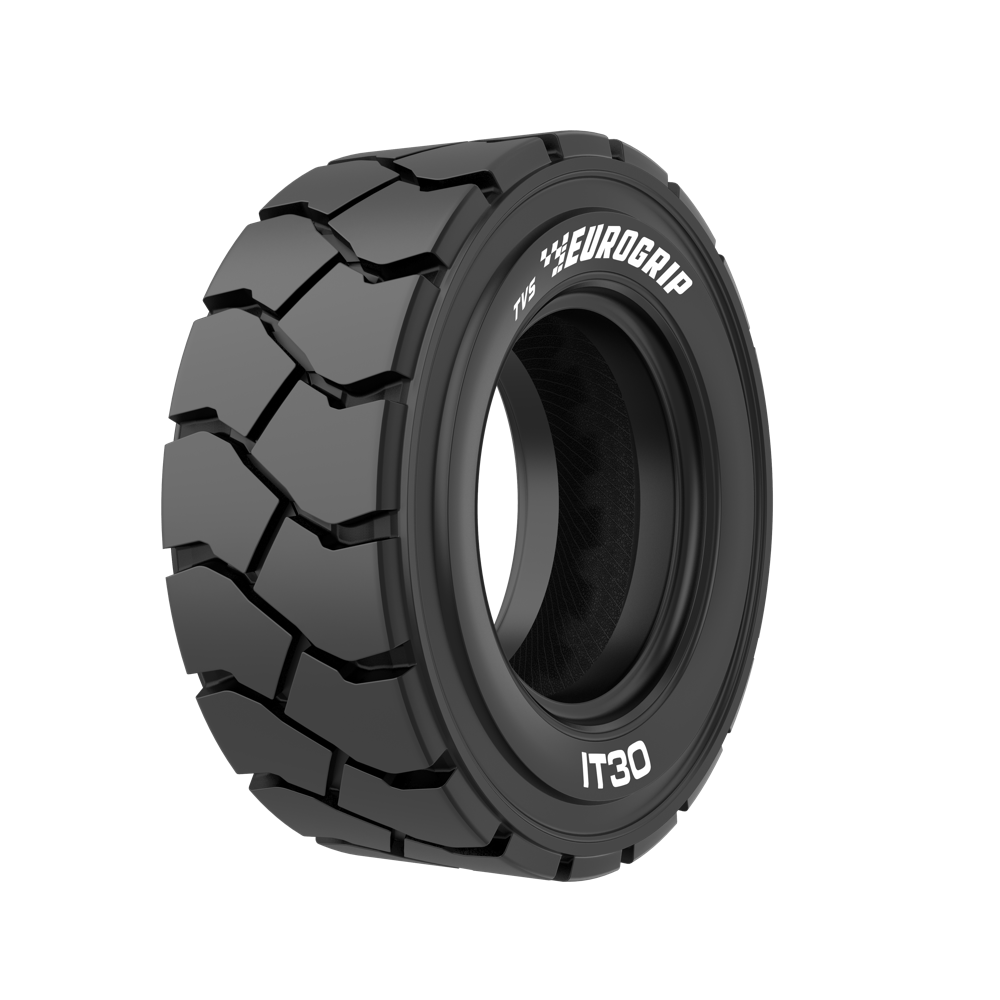
Heavy Duty Forklift

IT 30
 IND-1/IND-3
 A2
 Bias
 

Heavy Duty Forklift Tyres for High-Load Industrial Operations

TVS Eurogrip Heavy Duty Forklift Tyres are engineered to support the extreme load demands and continuous operation cycles of heavy forklift trucks in ports, logistics hubs, steel yards, and industrial facilities. These machines operate under intense load concentration and frequent manoeuvring, requiring tyres that deliver maximum stability, durability, and load-bearing strength. Our range of industrial forklift tyres is designed to ensure dependable performance for high-capacity lifting and material handling applications.

Built for Heavy Forklift Trucks

Heavy forklift trucks place greater stress on tyres compared to standard warehouse forklifts. TVS Eurogrip tyres are designed to deliver:
  • High forklift tyre load capacity for safe lifting
  • Strong casing construction to support heavy-duty cycles
  • Stable footprint for precise stacking and transport
  • Excellent resistance to wear and abrasion on concrete yards
These characteristics make them suitable for demanding port, container yard, and industrial material handling environments.

Industrial Tyre Patterns – IND Classification

TVS Eurogrip offers specialised patterns to match duty intensity and surface conditions. Common options include:
  • IT 30 IND-1 – Designed for standard industrial applications where stability and durability are required.
  • IND-3 industrial tyre for forklifts – Built with deeper tread and reinforced construction for heavier-duty applications involving higher loads and intensive duty cycles.
The IND classification defines tread depth and duty level, helping operators select the correct tyre for application intensity.

Solid Forklift Tyres for Heavy Applications

Solid forklift tyres are widely preferred for heavy duty forklift applications due to their puncture resistance and low maintenance. These tyres eliminate the risk of air loss and provide consistent performance under heavy loads.
  • Maximum heavy duty forklift tyre durability
  • Reduced downtime from punctures
  • Stable load handling during lifting operations
  • Long service life in high-cycle industrial use
TVS Eurogrip solid tyres are engineered to deliver consistent, maintenance-friendly performance in the most demanding industrial settings.

Performance and Longevity

TVS Eurogrip heavy duty forklift tyres are manufactured using durable tread compounds and reinforced structures to resist heat build-up and surface wear. Proper load matching and correct tyre selection help maximise performance and extend operational life. These tyres are a reliable solution for operators seeking high productivity and safety in heavy industrial environments.

FAQs – Heavy Duty Forklift Tyres

What are heavy duty forklift tyres?Heavy duty forklift tyres are specialised industrial tyres designed to handle high load capacities and continuous operation in demanding environments such as ports, warehouses, and industrial yards.
What types of heavy duty forklift tyres are available?Options include solid tyres and heavy-duty pneumatic tyres, as well as IND-1 and IND-3 classified industrial tyres designed for varying duty levels.
How do I choose the right forklift tyre?Selection depends on load capacity, operating surface, duty cycle, and machine specifications. Always match tyre load index and classification to the forklift’s lifting requirements.
What does IND classification mean?IND classification refers to industrial tyre tread depth and duty rating. For example, IND-1 is suited for standard industrial use, while IND-3 is designed for heavier-duty operations.
Are solid forklift tyres better than pneumatic ones?Solid tyres offer superior puncture resistance and low maintenance, making them ideal for heavy-duty industrial use. Pneumatic tyres may provide better cushioning depending on surface conditions.