
Aron Calvin Vijaykhar
Global Product Manager | Marketing & Brand Management Head
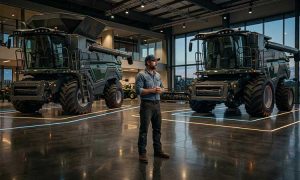
Harvesting is the most critical and time-sensitive period in the agricultural calendar. A delayed harvest can lead to crop damage from unpredictable weather, pest infestations, or grain shattering. To secure the season’s yield quickly and efficiently, modern farmers rely heavily on the Combine harvester.
This massive piece of machinery has revolutionized global agriculture by turning a labor-intensive, multi-step process into a single, smooth operation. However, buying one is a huge financial commitment. Whether you are looking for a New combine harvester price or researching the Best combine harvester in India, making an informed choice is essential.
In this complete guide, we will break down What is a combine harvester, explain its working mechanism, explore the different types available, and discuss why equipping your machine with high-quality tyres from TVS Eurogrip OHT is crucial for long-term farming success.
What is a Combine Harvester?
If you are new to large-scale mechanized farming, you might be wondering, What is a combine harvester exactly? Simply put, a combine harvester machine is a complex agricultural vehicle that literally “combines” three major harvesting operations: reaping (cutting), threshing (separating the grain from the stalk), and winnowing (cleaning the grain) into a single process.
Before this invention, farmers had to cut the crops manually, beat them to separate the grains, and toss them in the air to let the wind blow away the chaff. Today, a harvester combine harvester does all of this simultaneously as it drives through the field. The diverse Combine harvester uses in agriculture include harvesting wheat, rice, oats, barley, corn, soybeans, and sunflowers, making it an indispensable tool for large grain producers.
How Does a Combine Harvester Work?
Understanding How combine harvester works helps you appreciate the engineering behind this massive vehicle and makes it easier to maintain. The overall Working principle of combine harvester relies on a continuous flow of crop material from the front of the machine to the back.
The Harvesting Process
When the machine moves forward, the front header gathers the crops and cuts them at the base. The cut crops are then fed up a conveyor into the belly of the machine. Here, a rapidly rotating threshing drum beats the crops to break the grains away from the stalks. The loose grains fall through sieves to be cleaned, while the leftover straw is pushed out the back of the machine.
Key Parts of the Machine
To fully grasp the Functions of combine harvester equipment, you must know the main Parts of combine harvester:
- Header: The front attachment that cuts and gathers the crop. Headers can be changed depending on the crop.
- Reel: The spinning wheel at the front that pushes the crops into the cutter bar.
- Threshing Drum: The internal cylinder that beats the cut crops to separate the grain.
- Straw Walkers: These shake the remaining straw to release any trapped grains before tossing the straw out.
- Grain Tank: The storage bin where the clean, separated grain is collected until it is unloaded into a transport trailer.
Different Types of Combine Harvesters
Not all farms are the same, and neither are the harvesters. Knowing the different Types of combine harvester will help you choose the right fit for your specific land size, crop, and budget.
By Method of Movement
- Self-propelled combine harvester: This is an independent vehicle with its own engine and cabin. It is the most common type used in large-scale farming and offers maximum power and efficiency.
- Tractor mounted combine harvester: This machine does not have its own engine to drive. Instead, it is attached to and powered by a standard farm tractor. This is often a more Affordable combine harvester option for farmers who already own a heavy-duty tractor.
By Crop Specialization
Wheat combine harvester: Designed specifically for dry, standing crops like wheat and barley, featuring standard cutting headers and standard rubber tyres.
Paddy combine harvester machine: Rice is grown in flooded, muddy fields. A paddy harvester is designed with special tracks (crawler mechanisms) or highly aggressive mud tyres to prevent the heavy machine from sinking into the wet earth.
By Farm Size
Small combine harvester for small farms: Also known as a mini harvester, this is a compact version of the standard machine. It is perfect for navigating tight plots, terraced fields, or narrow village roads.
Agricultural combine harvester: The massive, standard-sized machines built for commercial farming on hundreds of acres.
Prices and Buying Guide
When you search for a Combine harvester for sale, the options can be overwhelming. Prices vary dramatically based on the brand, engine capacity, features, and whether the machine is new or used.
- New combine harvester price: A brand new, full-sized, self-propelled machine from a top brand is a massive investment, often ranging from ₹18 Lakhs to ₹30 Lakhs or more in India.
- Mini combine harvester price: If you are a smallholder, a mini harvester is a great alternative, usually priced between ₹5 Lakhs and ₹12 Lakhs.
- Used combine harvester for sale: If a new machine is out of your budget, buying a well-maintained second-hand unit can save you up to 40%. Always ensure you bring a mechanic to check the engine, threshing drum, and hydraulic systems before purchasing.
To find the Best combine harvester in India, consult local agricultural dealerships. Brands like Mahindra, Kubota, and Preet are highly popular, but the “best” brand is usually the one that has a service center closest to your farm to ensure quick repairs during harvest season.
A Combine harvester machine is one of the heaviest vehicles on a farm, especially when its grain tank is full. Carrying this immense weight over soft agricultural soil requires specialized tyres; standard tractor tyres are simply not enough for the load and the required flotation.
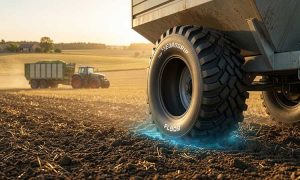
This is where TVS Eurogrip OHT tyres excel. As a global leader in Off-Highway Tyres, we offer a specialized lineup to meet every farming need. For operations prioritizing soil health and high-speed efficiency, our Radial Tyres, the HS 1000, HS 3000, and AR 4005, deliver a massive, wide footprint that minimizes compaction. For farmers requiring rugged stability and puncture resistance in harsh environments, our TR 72 Bias tyre is engineered to withstand the toughest stubble. These premium harvester tyres provide several critical benefits:
- Maximum Flotation to Prevent Soil Compaction: A fully loaded harvester can severely crush your soil, ruining its structure for the next planting season. The HS 1000 and HS 3000 are designed with a wide footprint that distributes weight evenly, allowing the machine to “float” over the field.
- High Load Carrying Capacity: When the grain tank fills up rapidly, the dynamic weight on the front axles spikes. Our AR 4005 radial tyre features reinforced casings to handle these extreme load shifts without sidewall failure.
- Superior Traction with Less Damage: Whether you are harvesting on a slippery hillside or a wet field, the specialized lug design of our TR 72 ensures you get maximum grip without aggressively tearing up the topsoil.
- Durability Against Stubble: After crops like corn or soybeans are cut, the remaining stiff stalks (stubble) act like sharp spikes. TVS Eurogrip OHT uses specialized, cut-resistant rubber compounds that prevent these tough stalks from puncturing the tyre, saving you from expensive downtime.
Conclusion
Mechanizing your harvest is the ultimate step in modernizing your farm. A Combine harvester drastically reduces your reliance on manual labor, speeds up the collection of your crops, and ensures you get your yield to the market before the weather turns.
By understanding the Working principle of combine harvester operations and carefully evaluating the different Types of combine harvester available, you can confidently invest in the right machine for your acreage. Whether you opt for a heavy-duty Self-propelled combine harvester or a Small combine harvester for small farms, remember that the efficiency of this heavy machinery is directly linked to the ground it rolls on.
Protect your massive investment and your valuable soil by equipping your harvester with premium agricultural tyres from TVS Eurogrip OHT. With the right machine and the right tyres, you can look forward to a faster, smoother, and more profitable harvest season for years to come.
Frequently Asked Questions (FAQs)
What are the combine harvester financing options in India?
Most major banks in India (like SBI, HDFC, and ICICI) offer specialized agricultural machinery loans for purchasing harvesters. You can often get up to 75-85% of the machine’s cost financed. Additionally, government subsidy schemes under the Sub-Mission on Agricultural Mechanization (SMAM) can provide significant financial relief.
Which are the best combine harvesters for rice paddy fields?
For wet, muddy rice fields, a track-type (crawler) Paddy combine harvester machine is the best choice, as tracks prevent the heavy machine from sinking. Kubota and Mahindra offer highly rated models specifically engineered for Indian paddy conditions, ensuring smooth maneuverability in deep mud without getting stuck.
What are common breakdowns in combine harvesters and fixes?
Common issues include jammed threshing drums, snapped drive belts, and clogged sieves. Fixes involve routinely cleaning the sieves to prevent grain blockage, adjusting the threshing drum clearance based on the crop type, and inspecting belts daily to replace worn ones before they snap during heavy operation.
How often should a combine harvester be serviced?
A harvester requires daily maintenance during the season, including greasing all moving parts, blowing dust out of the air filters and radiators, and checking engine oil. A comprehensive, full-machine service by a certified mechanic is highly recommended before the harvest season begins and immediately after it ends.
Why are specialized tyres important for a combine harvester?
Harvesters are incredibly heavy, especially when holding harvested grain. Specialized tyres, like those from TVS Eurogrip OHT, feature wide footprints for maximum flotation to prevent soil compaction. They also use cut-resistant rubber compounds to protect against punctures from sharp, tough crop stubble left in the field.