
Jed Soar
European Director - Technical Services & Product Performance
When selecting tyres for construction equipment such as Backhoe Loaders, Earth movers, excavators and Dumpers, the question often is radial or bias tyres. Both tyre types have distinct characteristics, performance benefits, and drawbacks that can influence their suitability for different construction applications. Understanding the strengths and weaknesses of each tyre type is crucial in making an informed decision as an end user but also even more importantly as the distributor to optimize efficiency, durability, and overall cost.
The radial tyre vs bias tyre comparison continues to influence tyre choice across construction fleets. Operators often ask if radial tires are directional most are not, but some high-performance steel belted radial tyres may feature directional tread for better water evacuation.
What Is a Radial Tire?
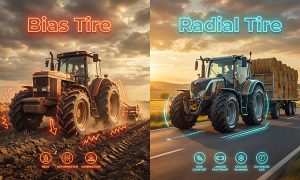
A radial tire features cords arranged perpendicular (90°) to the direction of travel, with steel belted radial tyres adding extra reinforcement under the tread. This radial tire construction improves flexibility, heat dissipation, and tread stability.
In radial construction, the sidewalls flex independently from the tread, which helps absorb shock and maintain better contact with the surface. Many modern radial tubeless tyres are also designed for large construction machinery, offering superior puncture resistance and fuel efficiency compared to traditional bias ply tires.
What Is a Bias Tire?
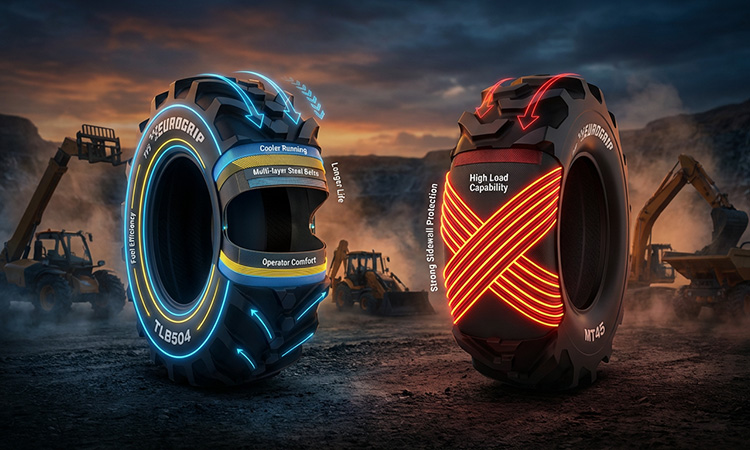
A bias tire, also known as a bias-ply tire, is built with layers of fabric cords laid diagonally across each other, usually at angles between 30° and 40° from the tread’s centerline. This construction of a tyre design forms a strong, crisscrossed structure that provides stiffness and excellent resistance against impacts or sidewall cuts.
In heavy-duty environments, such as quarries and demolition sites, this makes bias ply truck tires and bias ply mud tires particularly suitable. Their reinforced sidewalls handle heavy loads and rough terrain without easily deforming. However, compared to radial construction, bias tyres generate more heat during operation, which can shorten their lifespan and reduce fuel efficiency.
For short-haul, high-load, or off-road applications where sidewall strength is a priority, the bias tyre vs radial tyre choice often favors bias. Yet, for long-term, fuel-efficient operations, radials typically outperform.
Difference Between Radial Tyre and Bias Tyre
The core difference between radial vs bias tires lies in their internal construction of a tyre. In bias tyre vs radial tyre design, the cord plies in bias tyres run diagonally (typically at 30–40 degrees) and crisscross from bead to bead, creating a firm, rigid carcass.
In contrast, radial ply tires feature cords running radially from the centre to the bead, with layers of steel belts under the tread for strength. This design enhances flexibility and stability, improving comfort and reducing rolling resistance.
While bias ply truck tires and bias ply mud tires perform better in high-impact, off-road, or demolition environments, radials offer greater durability, comfort, and fuel efficiency especially for long-distance or mixed-terrain construction projects.
1. Superior Traction and Stability
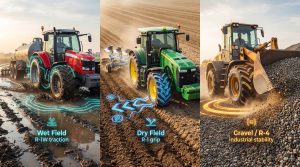
Radial tyres offer better contact with the ground due to their flat tread profile, providing superior traction, especially on softer surfaces. In construction, this translates to better grip and less slippage, making radial tyres ideal for heavy machinery like loaders/backhoes that work in challenging terrains.
2. Longer Tyre Life and Durability
The construction of radial tyres, with their flexible sidewalls and stronger belts reduce internal heat buildup, which significantly extends the tyre’s lifespan. Radial tyres operated at the correct pressure for load and operating speed wear evenly over time, providing longer service life, making them a cost-effective choice over the long run.
3. Fuel Efficiency
The lower rolling resistance of radial tyres helps construction vehicles consume less fuel. This becomes particularly advantageous in large construction operations where fuel consumption is a significant expense. Radials allow for smoother rides and better distribution of load weight, reducing energy requirements.
4. Improved Comfort
Radial tyres provide better shock absorption due to their flexible sidewalls, which enhance the comfort of the operator. In construction environments, where machinery often operates on uneven or rough surfaces, this can reduce fatigue for the driver and improve operational efficiency and safety.
1. Higher Upfront Cost
Radial tyres are generally more expensive to purchase upfront than bias-ply tyres. The higher initial investment may deter some operators, especially for small-scale projects or contractors with limited budgets. However, the longer lifespan of radial tyres often offsets this cost over time. This is often not explained fully to the end user so is a missed benefit and could be detrimental long term.
2. Less Sidewall Protection
The flexible sidewalls of radial tyres, while beneficial for comfort and traction, are more prone to damage from sharp rocks, debris, or obstacles. This can be a significant drawback in environments where tyres are exposed to tough, abrasive materials, leading to frequent sidewall punctures.
3. More Vulnerable to Overloading
Radial tyres are typically less tolerant to overloading compared to bias tyres. In construction settings where vehicles are sometimes pushed beyond their capacity, this could result in tyre failure, especially in cases of underinflation or overloading causing operational delays. Particular attention should be paid in the case of large loaders where “tipping load” should be calculated to arrive at a front wheel pressure that will support the load whilst the bucket is fully emersed in the material and in its lift phase. Many do not differentiate between front and rear pressures having both set the same, rears should always be lower than the front to utilize traction when the bucket is fully laden.
1. Strong Sidewall Protection
Bias tyres have thick, rigid sidewalls that provide excellent protection against punctures and cuts. In rugged construction environments, such as quarries, demolition sites, or locations with exposed rocks and debris, bias tyres offer greater durability when the sidewalls are exposed to potential damage.
2. Lower Initial Cost
Bias-ply tyres are typically cheaper than radial tyres, making them attractive to contractors and construction companies looking to minimize their initial investment. For smaller construction projects or those with tight budgets, this lower upfront cost can be a decisive factor.
3. Better in Heavily Loaded Applications
Bias tyres are generally better suited to handling extreme loads. Their rigid construction allows them to distribute weight more evenly across the whole carcass, making them preferable for heavy-duty equipment that frequently operates under high loads or in extreme conditions.
1. Shorter Tyre Life
Bias tyres tend to wear out faster than radial tyres due to the tendency to over inflate. The uneven tread wear that bias tyres often experience because of this leads to shorter service life, ultimately resulting in higher replacement costs over time.
2. Less Traction and Stability
The round tread profile of bias tyres offers less ground contact, leading to reduced traction compared to radial tyres. This can be a disadvantage in construction applications that require higher traction and precise movement, such as excavation or grading. However correct inflation to load pressures help reduce this factor.
3. Lower Fuel Efficiency
The higher tendency to encounter slippage of bias tyres increases fuel consumption in heavy machinery. Over time, the increased fuel costs can significantly outweigh the initial savings in purchasing the tyres.
4. Reduced Operator Comfort
Bias tyres have stiffer sidewalls, which provide a rougher ride compared to radial tyres. This can lead to operator fatigue in long shifts and reduce productivity in certain applications where smooth operations are essential.
Conclusion: Which Tyre Type to Choose?
Choosing between radial and bias tyres for construction applications depends largely on the specific operational needs and the environment in which the tyres will be used.
Radial tyres are better suited for projects where traction, fuel efficiency, comfort, and long-term durability are priorities. They excel in applications requiring consistent, high-performance machinery operation across diverse terrains and in situations where the vehicle is subjected to long distances between jobs ie plant hire and contracting. Though they require a higher initial investment, the long-term savings in fuel and replacement costs can make radials a more cost-effective option in many cases.
Bias tyres, on the other hand, are preferable in heavy-duty, high-load, or rugged environments where sidewall protection is critical. They provide an affordable upfront cost and can handle extreme conditions without suffering frequent punctures or damage. Bias tyres are ideal for short-term projects or operations where initial cost savings are essential, but they do require more frequent replacements due to their shorter lifespan.
In the end, understanding the trade-offs between these two tyre types allows construction companies to align their tyre selection with their operational demands, ensuring better performance, reduced downtime, and optimized costs. These factors should be a priority for the dealer in maximizing a customers return on investment and retaining confidence for repeat business.
Frequently Asked Questions (FAQs)
What is the difference between a radial tyre and a bias tyre?
Radial tyres have cords running perpendicular to the tread, while bias tyres have diagonal layers crossing each other. This gives radials better flexibility and fuel efficiency, and bias tyres superior sidewall strength.
Which tyre type is better for heavy construction?
For long-term durability and comfort, radial tires are better. For rugged terrain or short-term, high-load projects, bias ply truck tires provide better sidewall resistance and stability.
Are radial tires directional?
Not all. Most radial ply tires used in construction are non-directional, but certain steel belted radial tyres with special tread patterns may be directional for optimal traction.
Do bias tyres last as long as radial tyres?
No. Bias ply tires generally wear faster due to greater internal friction and heat buildup. Radial tyres, with their layered belt design, offer longer tread life.
What is a radial tubeless tyre, and is it better for construction?
A radial tubeless tyre removes the inner tube and seals directly to the rim, offering better puncture resistance and less maintenance ideal for construction environments.
How do I decide between radial and bias tyres?
Evaluate job type and terrain: choose bias tyres for rock quarries, demolition, or heavy loading; choose radial tyres for long hauls, smoother operation, and reduced fuel use.