
Jed Soar
European Director - Technical Services & Product Performance
VF (Very High Flexion) flotation radial tires have been a transformative technology in agriculture, promising greater soil protection, increased yield, and enhanced efficiency by reducing soil compaction. These tires are designed to carry more load at lower inflation pressures, spreading weight over a larger surface area and reducing soil disturbance, particularly in wet or soft field conditions. However, as with any innovation, VF flotation radials come with their own set of challenges—especially when the real-world results don’t fully align with the theoretical advantages.
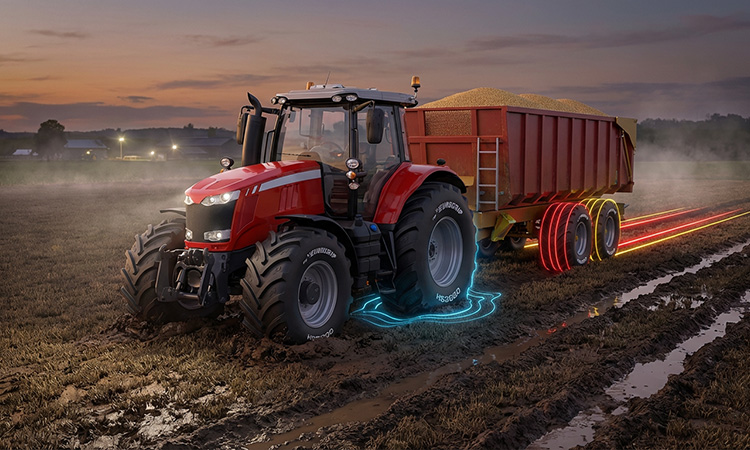
The “elephant in the room” that many in the agricultural industry are wary of discussing is the increased wear rate and challenges associated with field pressures 40% lower than standard flotation radial operating pressures. In addition, medium-horsepower tractors often struggle to pull heavily laden trailers off the field at these low pressures due to the significant increase in rolling resistance. Let’s dive into these issues in detail.

1. Understanding VF Flotation Radials: Benefits and Key Differences
VF flotation radials were developed to improve upon traditional flotation tires, which spread the load over a wider area to reduce soil compaction as we all in the industry know and are constantly told. The main advantage of VF flotation radials is their ability to carry a greater load at reduced pressures without compromising on durability or traction. This has led many Manufacturers to promote VF flotation radials, anticipating an improvement in soil health and better crop yields for the end users.
The appeal is clear: operating at lower tire pressures translates to less soil compaction, leading to increased root development, better soil aeration, and ultimately higher crop yields. However, running these tires at field pressures 40% lower than traditional flotation tires reveals weaknesses in terms of longevity and rolling resistance, leading to increased costs and, in some cases, reduced field efficiency.
2. The High Wear Rate Problem
The significant wear rates of VF flotation radials, especially when used at low field pressures, is a primary concern. Here’s why:
Road Transport Wear: The tread wear issue is compounded when VF flotation radials transition from field to road. When operated at low pressures on harder surfaces like paved roads, these tires are not only subjected to increased friction but also to higher rolling resistance. Farmers who use these tires frequently on roads see a rapid wear rate that diminishes the lifespan of the tire, leading to higher costs for replacements or repairs.
Economics of Tire Replacement: While the benefits of VF flotation radials are theoretically notable, the high cost of frequent replacement eats into any economic savings from improved yields or efficiency. This wear rate issue has led to farmers and dealers questioning the cost-effectiveness of these tires.
3. Increased Rolling Resistance at Low Field Pressures
A common challenge with VF flotation radials is the increased rolling resistance when operating at very low pressures. This creates operational difficulties for medium-horsepower tractors, which often struggle to move heavily laden trailers off the field at these low pressures. Some key reasons include:
Rolling Resistance and Load: Low tire pressure causes a greater contact patch between the tire and the ground, increasing the rolling resistance substantially. This resistance requires more power to pull the load, which can be especially problematic for mid-sized tractors that don’t have the horsepower to compensate for the additional drag.
Increased Fuel Consumption: The additional power needed to overcome the rolling resistance means increased fuel consumption, which, combined with high tire wear, leads to even greater operating costs.
Operational Delays: In fields with particularly challenging conditions, such as soft or uneven terrain, farmers may face delays in transporting loads to the edge of the field, as lower-powered tractors simply can’t handle the weight at low tire pressures. This leads to logistical inefficiencies and potential downtime.
4. What Can Farmers Do? Practical Solutions to the VF Flotation Radial Conundrum
Adjusting Tire Pressure for the Terrain: One of the most effective ways to mitigate high wear rates is to adjust tire pressures based on the type of terrain. Using lower pressures only in areas that truly need soil protection, like softer or wetter field areas, can help extend tire life. This can be done with a CTIS (Central Tyre Inflation System) but the investment needed for this system is often out of reach for the average farmer this can affect.
Consider Tire Upgrades for High-Wear Applications: Certain VF flotation radials are better suited to different conditions. Choosing radials specifically designed for extended tread life or enhanced durability can help reduce overall wear rates, even if it means compromising on maximum load capacity.
Using Larger or Higher-Horsepower Tractors: Although not a small investment, transitioning to higher-horsepower tractors may allow for better performance at low pressures, especially when pulling heavily loaded trailers in the field. While this isn’t a quick fix, it can be a necessary step for operations that rely heavily on VF flotation radials and require frequent low-pressure operation.
Carefully Managing Road Use: Avoiding road use at low pressures can help extend tire life. Instead, inflating the tires to appropriate pressures before road travel may mitigate the wear and tear seen from prolonged low-pressure use on harder surfaces.
5. Looking Forward: What the Industry Needs
The rapid adoption of VF flotation radials highlights an important trend in agriculture: the need for equipment and technology that can protect soil health without compromising operational efficiency. However, tire manufacturers must address these weaknesses if VF flotation radials are to deliver on their promise.
Large Loads at Low Inflation Pressures
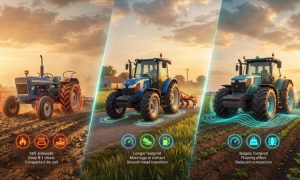
VF technology lets you move large loads at low inflation pressures, expanding the footprint to cut compaction. The trade-off: a larger contact patch increases rolling drag, so mid-horsepower tractors may struggle to pull heavy trailers out of soft fields when pressures are ~40% lower than standard fuel use rises and cycle times slip.
What to do now
Stage pressure by task. Use lowest safe field pressure only where soils truly need it; raise pressure for firmer headlands and turns.
Balance power to load. If field train weight outgrows drawbar torque, consider gearing, ballast re-distribution, or higher PTO/engine torque windows before dropping pressure further.
Mind temperature & speed. Very low pressure combined with long high-speed runs can lead to excessive heat and wear; consider scheduling short hauls or inflating before road sections.
Field-to-Road Pressure Strategy (CTIS Optional)
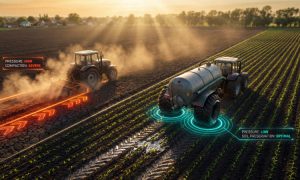
Running field pressures onto tarmac speeds tread wear and wastes fuel. Inflate for road legs; deflate again at the field. A CTIS helps, but even without CTIS you can use “pressure posts” (portable air) at field gates to swap modes quickly. The goal is simple: low slip in the field, low rolling resistance on the road.
Practical checklist
Field mode: lower pressure for traction and soil care; limit distance on hard surfaces.
Road mode: restore recommended transport pressure to shrink the footprint, cut heat, and stabilise handling.
Route plan: bunch road miles together so you inflate once, run long, then deflate once.
Crew roles: one operator airs up; a second stages the next trailer to keep throughput high.
Matching VF Flotation to Implements & Trailers
VF isn’t only for tractors; radial implement tires and farm implement tires on tankers, spreaders, and grain carts often set your true field limit. Specify trailer tires with VF/IF options (eg. HS3000 or AR4005) so the whole train floats, not just the tractor. That reduces rutting at headlands and improves pull-out on soft exits.
Spec tips
Capacity first: choose load index for worst-case fill + slope; then select the lowest working pressure that meets speed.
Width vs size: a wider radial flotation tire may beat a taller one if axle spacing or fenders constrain diameter.
Size continuity: pairing front/rear and trailer SKUs (e.g., tractor VF800/65R32 with compatible trailer flotation) simplifies spares and inflation charts.
Conclusion
VF flotation radials offer considerable advantages for modern farming but have an elephant in the room that must be addressed to deliver their promised benefits. The high wear rates and increased rolling resistance at low pressures present financial and operational burdens that cannot be ignored. With ongoing innovation and a push for practical, real-world solutions, the industry can move closer to tires that offer both durability and efficiency, giving farmers the flexibility they need without compromising on cost or effectiveness.
Frequently Asked Questions (FAQs)
What’s the real benefit of VF Flotation vs standard flotation?
Lower pressure for the same load, which expands the footprint and protects soil on soft fields, provided you manage road legs and heat correctly.
Do VF flotation radials increase rolling resistance at very low pressure?
Yes. A larger contact patch raises rolling resistance, so medium-power tractors may struggle to tow heavy trailers at low field pressures. Plan pressure changes and routes accordingly.
How do I avoid the high wear some users report?
Don’t run field pressures on the road. Inflate for transport, limit long high-speed runs at low pressure, and select tread compounds built for mixed usage.
Are IF/VF Farm Tires worth it on implements, not just tractors?
Often, yes. Upgrading to IF/VF Farm Tires on spreaders/carts means the whole convoy runs lower pressure, reducing ruts and pull-out delays. Match axle loads and speeds carefully.
Which products fit trailer flotation roles?
Look at dedicated trailer lines such – AR4005 Trailer Tires or mixed-service radials like as HS3000; choose by load/speed table and target field pressure.
When should I choose a size like VF600/70R28
When you need high load capacity with lower operating pressure on high-horsepower tractors, and you can accommodate the diameter, fenders, and gearing implications in your spec.
What’s the quick win if I can’t afford CTIS yet?
Adopt a field-to-road pressure routine using gate-side air, batch road miles, and keep a laminated inflation chart in the cab to reduce