
Aron Calvin Vijaykhar
Global Product Manager | Marketing & Brand Management Head
The compact wheel loader (CWL) is the undisputed “Jack-of-all-trades” on the modern job site. Whether it is moving mulch in a landscape yard, clearing snow in a parking lot, or loading aggregate in a quarry, these machines are constantly in motion. However, this versatility comes at a cost. The tires bear the brunt of every turn, every load, and every jagged rock.
For fleet managers and operators, tire failure is the number one cause of unplanned downtime. A blown sidewall or a separated tread doesn’t just cost money to replace; it halts production. As we navigate the 2026 market, understanding the specific failure modes of these tires is critical.
In this technical guide, we break down the Common Problems in Compact Wheel Loader Tyres, the physics behind why they happen, and most importantly how to prevent them. Whether you are looking to buy compact wheel loader tyres for a single machine or manage a massive fleet, this knowledge will save you thousands in the long run.
Why Compact Wheel Loader Tyres Fail Prematurely
Compact loaders operate under constant stress. Frequent starts and stops, sharp turns, uneven terrain, and heavy lifting put extreme pressure on tyres. When tyres are incorrectly selected or poorly maintained, problems appear quickly.
Understanding tyre failure patterns helps operators extend tyre life and maintain safe operations.
1. Improper Tire Pressure
By far the most prevalent issue in the industry is Improper tire pressure. It is estimated that nearly 90% of tire failures can be traced back to inflation issues.
The Problem: Underinflation
When a tire is underinflated, it cannot support the vertical load of the machine. The sidewalls bulge outward, creating excessive flex.
• Consequence: This flexing generates massive internal heat, which breaks down the rubber bonds and leads to ply separation. You will often see “zipper ruptures” or circumferential cracks on the upper sidewall.
• Performance Hit: It causes the tire to “squirm,” increasing rolling resistance and fuel consumption.
The Problem: Overinflation
Some operators overinflate tires believing it helps carry heavier loads.
• Consequence: This reduces the contact patch (footprint) to a small strip in the center. The result is rapid center wear and a high susceptibility to “impact breaks”. A rock that a properly inflated tire would absorb becomes a projectile that snaps the tense casing of an overinflated tire.
• Performance Hit: Traction is drastically reduced, leading to wheel spin and cuts.
Prevention Strategy:
• Daily Checks: Use a calibrated gauge every morning. Visual inspection is not enough for modern radial or stiff bias tires.
• Load Matching: Adjust pressure based on the load. If you are switching from moving light snow to heavy wet concrete, the pressure requirements change.
• TPMS: Consider retrofitting a Tire Pressure Monitoring System if your new compact wheel loader tyres support it.
2. Heat Buildup and Separation
Compact wheel loaders are increasingly being used for “load and carry” operations where they travel longer distances at higher speeds.
The Problem:
Construction tires are designed for torque, not speed. When a standard bias-ply loader tire (rated for 10 km/h) is driven at 30 km/h down a road for 5 miles, heat builds up in the casing. Rubber is a poor conductor of heat; once it gets hot, it stays hot.
• Consequence: The heat causes the tread to separate from the casing (delamination). This often looks like a sudden blowout or large chunks of tread peeling off.
Prevention Strategy:
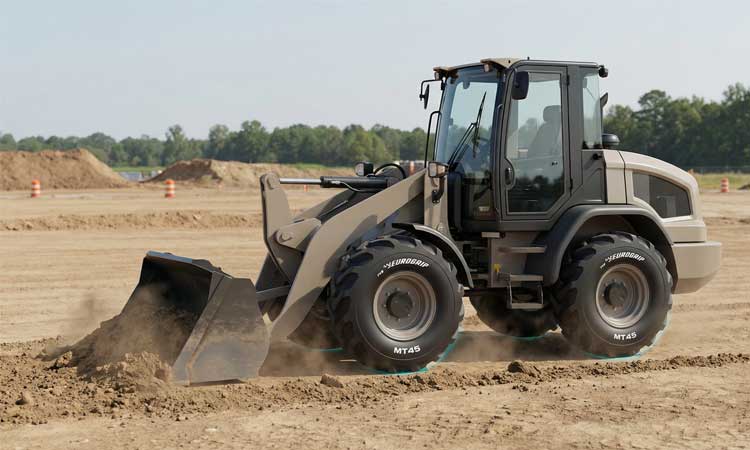
• Check Speed Ratings: Always verify the Speed Symbol. A tire rated A2 is for slow work. If you road your machine, you need a tire rated A8 (40 km/h) or higher, like the TVS Eurogrip MT 45.
• Radial Upgrade: If your operation involves roading, switch to radial tires (like the TLB 522). The steel belt construction dissipates heat far better than bias nylon plies.
3. Cuts, Chunks, and Impact Damage
In the rough-and-tumble world of construction, debris is everywhere.
The Problem:
• Sidewall Cuts: CWLs often work in tight spaces, scraping against curbs, rebar, or rock piles. The sidewall is the weakest point.
• Tread Chunking: This occurs when high torque is applied on loose, sharp surfaces. The tire slips, and the sharp rocks slice off pieces of rubber.
Prevention Strategy:
• Select “HD” Models: For severe environments, standard tires won’t cut it. You need Industrial Tires for Compact Loader applications with “Heavy Duty” (HD) markings, such as the TVS Eurogrip MT 45 HD. These feature reinforced sidewalls and “cut-and-chip” resistant compounds.
• Clean the Site: A simple sweeper run can save thousands in tire damage.
• Operator Training: Teach operators to avoid spinning the wheels when digging into a pile. Spinning is the fastest way to destroy a mud-terrain compact wheel loader tyres tread.
4. Irregular Wear Patterns
Your tires tell a story. Reading the wear pattern can diagnose mechanical issues before they destroy the machine.
The Problem:
• Heel-and-Toe Wear: Often caused by high torque in one direction or excessive braking.
• One-Sided Wear: This indicates a mechanical issue, such as a bent axle, worn kingpins, or misalignment.
• Cupping: Often a sign of loose suspension components or severely unbalanced wheel assemblies.
Prevention Strategy:
• Rotation: Rotate tires front-to-back and left-to-right regularly to promote even wear.
• Alignment Checks: If you see one-sided wear, don’t just replace the tire, fix the machine alignment.
5. Application Mismatch
One of the common issues faced by wheel loader fleets is using the wrong tire for the job.
The Problem:
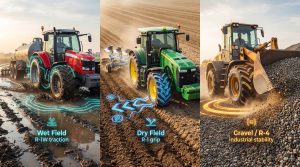
• Ag Tires in Construction: Using tractor tyres compact wheel loader variants (R-1) on a concrete recycling yard. The deep lugs will squirm and tear off rapidly on the hard surface.
• Construction Tires in Snow: Using a smooth hard-surface tire in winter. It turns into a hockey puck.
Prevention Strategy:
• Winter Ops: For snow removal, use dedicated winter compact wheel loader tyres or siped treads that remain flexible in freezing temps.
• Indoor Ops: If working in a warehouse, use white compact wheel loader tyres (non-marking) to avoid black scuffs on the floor.
• Mud Ops: Use all-terrain compact wheel loader tyres with self-cleaning lugs (like the MT 63) for agricultural or muddy sites.
How to Buy Smart in 2026
The market for compact wheel loaders market accessories is shifting online.
• New vs. Used: While used compact wheel loader tyres may seem cheap, the invisible casing fatigue often makes them a poor investment for high-production machines. Always buy new compact wheel loader tyres for your primary fleet to ensure safety.
• Online Availability: Fleet managers are increasingly looking to buy compact wheel loader tyres via digital catalogs. Whether searching for online compact wheel loader tyres or local dealers, transparency in specs (Ply Rating, Load Index) is key.
• USA Availability: The demand for usa compact wheel loader tyres with specific “Severe Duty” compounds is rising, driven by infrastructure projects.
Conclusion
Preventing Common Problems in Compact Wheel Loader Tyres isn’t rocket science it is discipline. It is the discipline of checking Improper tire pressure every morning. It is the discipline of training operators not to spin tires. And it is the discipline of choosing the right brand compact wheel loader tyres like TVS Eurogrip that are engineered for your specific terrain.
By addressing these five common problems proactively, you don’t just save rubber; you save the schedule.
Ready to stop the downtime? Explore the TVS Eurogrip range today. Check our catalog for compact wheel loader tyres sale events and find the perfect fit for your fleet.
Frequently Asked Questions (FAQs)
What is the correct pressure for compact wheel loader tyres?
There is no single number. It depends on the load and tire size. However, Improper tire pressure is the leading cause of failure. Typically, it ranges between 35-50 PSI, but always check the manufacturer’s manual or the tire sidewall for the specific load index.
Can I use tractor tyres on my compact wheel loader?
Generally, no. While tractor tyres compact wheel loader sizes might fit, tractor tires (R-1) have flexible sidewalls designed for pulling in soil. Loader tires (R-4) have stiff sidewalls designed to handle the massive vertical weight of a loaded bucket. Using tractor tires can lead to dangerous instability.
How do I know if I need "HD" (Heavy Duty) tyres?
If you work in recycling, demolition, or rocky terrain, you need HD tires. If you see cuts on your sidewalls or chunking on the tread, upgrade to an HD model like the MT 45 HD.
Where can I buy TVS Eurogrip compact loader tyres?
You can find our brand compact wheel loader tyres through our global network of distributors. Many authorized dealers also offer online compact wheel loader tyres ordering for convenience.
What is the difference between R-4 and L-3 treads?
R-4 is an industrial traction tread (like the MT 45), ideal for mixed dirt and hard surfaces. L-3 is a rock tread (like the EM 27), designed for harsher, rockier environments. Choose R-4 for versatility and L-3 for durability in quarries.
Why are my tires wearing out in the center?
Center wear is the classic sign of overinflation. High pressure causes the tire to bulge, forcing the center tread to carry all the load. Lower the pressure to the recommended spec to flatten the footprint.