

Jed Soar
European Director - Technical Services & Product Performance
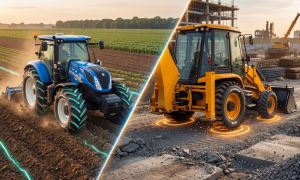
Modern agriculture requires machinery that can handle a wide variety of tasks under diverse field conditions. Equipment must be powerful, efficient, and capable of navigating different soil types while maintaining soil health. As tractors and other heavy machinery become larger and more powerful, soil compaction has become an increasing concern. To address this, farmers often use either dual wheels or single wide flotation tires. Each approach has distinct advantages and disadvantages, especially concerning soil health, operational efficiency, and cost. So as an industry what factors should we be aware of when recommending a compaction reducing system. Here’s an in-depth look at these tire solutions.
Duals or Low-Pressure Agricultural Tyres: Which to Choose?
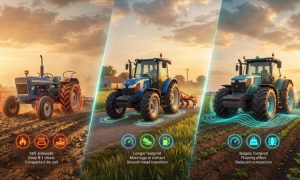
As machinery power increases, farmers must choose between dual wheels and low-pressure agricultural tyres. Both aim to distribute load and minimize compaction, but they achieve this differently. Dual wheel rims double the tyre contact area by pairing standard tyres, while high flotation ag tires rely on greater volume and lower air pressure to spread the weight evenly.
So, what are flotation tires exactly? These tyres operate at reduced inflation, creating a larger footprint that “floats” on the soil surface. This minimizes rut formation and helps retain pore space essential for root growth. Conversely, tractor dual wheel kits are more adaptable, allowing operators to add or remove extra tyres depending on crop rows, moisture, or season. Deciding between the two depends on terrain, crop schedule, and equipment versatility rather than a single performance metric.
Dual Wheels in Agriculture
Benefits
1. Reduced Ground Pressure: Dual wheels distribute the weight of machinery across a larger surface area, which reduces the pressure exerted on the soil. This spread-out pressure helps minimize soil compaction, which is essential for maintaining healthy root zones and soil porosity.
2. Enhanced Traction: By increasing the total tire footprint, dual wheels provide better traction, especially in wet or loose soil conditions. Improved traction can lead to more efficient fuel usage and less wheel slip, which can help prevent soil disturbance and reduce the risk of rutting.
3. Greater Stability: The dual-wheel setup offers increased stability for heavy equipment on sloped or uneven terrain. This stability is essential in fields with variable topography, as it prevents the machinery from tipping and reduces the need for slower, more cautious driving.
4. Flexibility for Seasonal Applications: Dual wheels can be added or removed as needed, making them adaptable for seasonal operations. Farmers will tend to use duals during planting season to reduce soil disturbance.
Downsides
1. Soil Smearing and Compaction in Wet Conditions: While dual wheels help distribute weight, they can still cause soil compaction if conditions are too wet.
2. Increased Maneuvering Difficulty: Dual wheels add width to machinery, which can make it challenging to maneuver, especially in smaller fields, narrow lanes, or areas with tight turns. This added width can also make transportation on public roads more challenging.
3. Increased Wear and Maintenance: With more tires to monitor and maintain, dual wheels can lead to increased maintenance demands. Matching tire pressure across duals is crucial, including having the inner tyre at an increase of 0.1 bar or 2psi than the outer attached dual.
4. Higher Operational Costs: Dual wheels add to machinery costs, both in terms of initial investment and fuel. The extra wheels contribute to more rolling resistance, leading to higher fuel consumption compared to single wide flotation tires.
Wide Flotation Tires in Agriculture
Wide flotation tires are a popular alternative to dual wheels, especially in operations where reducing soil compaction is a priority. These tires are typically wider than standard tires, distributing the machine’s weight over a broader area and creating a “flotation” effect.
Benefits
1. Significant Reduction in Soil Compaction: Flotation tires spread the machine’s weight over a large surface area, reducing ground pressure to levels similar to dual wheels. This design minimizes soil compaction, preserving soil porosity and structure, which is critical for crop growth and water infiltration.
2. Improved Maneuverability: Because they are single tires, flotation tires add less width than dual wheels, making it easier for machinery to maneuver in tight spaces. This benefit is particularly advantageous in smaller or irregularly shaped fields and during transport on narrow roads.
3. Fuel Efficiency: The wide footprint of flotation tires generally results in lower rolling resistance than dual wheels. This efficiency means reduced fuel consumption, which can lower operational costs over time.
4. Versatile Performance Across Soil Conditions: Flotation tires perform well in a range of soil moisture levels, as their design helps avoid the soil smearing and compaction that can happen with dual wheels in very wet conditions.
Downsides
1. Limited Traction in Certain Conditions: In extremely wet or loose soils, the wide surface of flotation tires may struggle to gain traction, leading to slipping and soil displacement. This issue can reduce efficiency and increase the risk of creating ruts that harm soil structure.
2. Higher Initial Costs: Wide flotation tires tend to be more expensive than standard tires or even dual-wheel setups. Additionally, replacing flotation tires can be costlier due to their larger size and specialized design.
3. Reduced Customization: Unlike dual wheels, which can be attached or removed as needed, flotation tires are a more permanent choice. Switching to a different type of tire for seasonal operations is less practical with flotation tires, which can be limiting if machinery use varies significantly across the year.
4. Increased Wear on Hard Surfaces: Flotation tires are designed for softer soils with therefore substantially lower operating pressures (typically 0.6 to 0.8 bar) and tend to wear down faster on hard surfaces like concrete or asphalt. This faster wear means that operations requiring significant road travel might face higher maintenance costs or need frequent tire replacement.
Soil Health Considerations
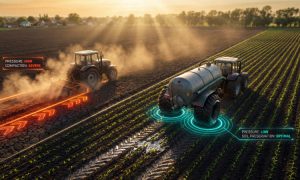
The primary concern with heavy agricultural machinery is the impact of soil compaction on long-term soil health. Healthy soil has a balance of pore spaces that allow for air and water movement, root growth, and microbial activity, all of which contribute to crop productivity. Both dual wheels and wide flotation tires aim to mitigate compaction but impact soil health in slightly different ways.
Dual Wheels: While duals can reduce compaction by spreading the load, they also double the number of tires in contact with the soil. This increased tire count can result in multiple areas of compaction if the machinery covers the same ground multiple times. Soil structure may degrade over time if not managed properly, leading to a “plow pan” effect that restricts root growth and water infiltration.
Wide Flotation Tires: Flotation tires generally create fewer compaction zones, as there are fewer tire tracks overall. The wider tires exert less pressure per square inch, preserving soil porosity. However, in some cases, the large tire surface can contribute to soil smearing, particularly in excessively wet conditions. Long-term reliance on flotation tires may improve soil structure by minimizing pressure, but proper maintenance and monitoring of soil conditions are still essential.
Reasons Why Some Farm Tractors Have Dual Wheels
Many farm tractors use duals not only for soil protection but also for added stability and control. When heavy implements are attached or slopes are steep, duals provide a wider stance that reduces rollover risk and wheel slip. The additional footprint increases traction in clay-rich or saturated soils where single tyres may sink.
What’s the point of double rims? They allow farmers to mount and detach duals quickly, converting a farm tractor from a narrow transport setup to a field-ready machine. For heavy towing or deep tillage, duals deliver consistent ground contact and reduce operator fatigue by limiting lateral sway. In short, duals offer strength and adaptability for farms handling varying field conditions throughout the year.
Five Advantages of Using Dual Wheels and Tyres on Your Tractor
Here’s why dual wheels remain a proven solution for heavy machinery and fieldwork:
1. Enhanced Traction: Doubling the footprint increases pulling power, vital for large farm tractors and implements.
2. Reduced Soil Compaction: Spreads pressure like flotation tires for dump truck systems, protecting root structure and improving water infiltration.
3. Greater Stability: A wider base enhances balance on uneven ground or during transport of heavy loads.
4. Flexible Operation: Modular tractor dual wheel kits allow easy removal when narrower row spacing is required.
5. Long-Term Cost Efficiency: While initial investment is higher, better traction and lower tyre wear reduce overall operating costs.
Dual setups continue to evolve with lighter rims and faster mounting systems, maintaining relevance even as high flotation tires become more popular in precision agriculture.
Conclusion: Choosing the Right Tire System for Your Needs
When deciding between dual wheels and wide flotation tires, farmers must consider not only soil health but also operational needs, field conditions, and economic factors. Both tire systems offer effective solutions for reducing soil compaction, each with unique advantages and limitations.
For farms with diverse field conditions or smaller fields requiring frequent maneuvering, wide flotation tires might provide the best balance of soil health preservation and operational efficiency. However, for operations requiring more stability, traction, or customizable setups, dual wheels may be the better choice, particularly if seasonal changes or specific crop needs demand added flexibility.
Ultimately, the decision between dual wheels and flotation tires should be informed by the unique characteristics of the soil, crop requirements, and the overall machinery investment strategy. Regardless of the choice, careful attention to tire pressure, field conditions, and seasonal soil management practices will help maintain soil health and ensure sustainable agricultural productivity.
Frequently Asked Questions (FAQs)
What is a flotation tire?
A flotation tire is a wide, low-pressure tyre designed to “float” across soft or wet soil, reducing compaction and preserving soil structure.
What’s the point of double rims on tractors?
Double rims let farmers attach dual wheels easily for better traction and balance, then remove them when a narrower setup is needed.
Are high flotation tires better than dual wheels?
High flotation ag tires excel in minimizing compaction and easing road transport, while dual wheels provide more stability and traction under heavy pull loads.
Can flotation tires be used on trucks or dumpers?
Yes. Flotation tires for trucks and 22.5 flotation tires are widely used for off-road dumpers and trailers carrying heavy loads on soft soil.
Do ATVs use flotation tires too?
Absolutely. ATV flotation tires give excellent grip on sandy or muddy terrain, protecting turf while improving floatation performance.
How do I choose between duals and flotation tires for my farm tractor?
It depends on your soil type, implement weight, and road travel needs. If flexibility and traction are key, go with dual wheel rims; for minimal soil disturbance and smoother transport, tractor flotation tires are ideal.
Do flotation tires wear faster on roads?
Yes. High flotation tires are softer and optimized for field performance; frequent road use can accelerate tread wear.