
Aron Calvin Vijaykhar
Global Product Manager | Marketing & Brand Management Head
If you farm in India, you know that your tractor is not just a machine for ploughing. It is the heartbeat of your operation. In the morning, it might be deep in a wet paddy field, churning through mud. By afternoon, it might be hauling a fully loaded trailer of sugarcane on a paved highway.
This unique “dual-use” culture of Indian agriculture where tractors serve as both field warriors and transport vehicles creates a difficult choice when buying tyres. Do you prioritize traction to pull through sticky black cotton soil? Or do you prioritize flotation to stop your tractor from sinking and destroying your land?
For years, this was a hard choice. But new technology is changing the game. In this guide, we will explore the debate of traction vs. flotation, explain what these terms mean for Indian crops, and help you find the right balance for your farm.
What is Agricultural Tyre Traction?
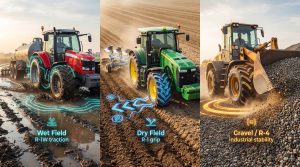
Agricultural tyre traction is simply the grip your tyre has on the ground. It is the force that converts your engine’s horsepower into forward movement. In India, traction is often the number one priority for farmers because of our soil conditions.
- Puddling: In wetland farming (like rice), you need tyres that can bite through the slick slurry to find hard ground underneath.
- Hard Soil Tillage: Before the monsoons, plowing hard, sun-baked earth requires immense pulling power (drawbar pull).
If your tractor tyres traction is poor, your wheels slip. Wheel slip is the enemy of profit. It wastes diesel, wears out your tyres faster, and delays your work. This is why many traditional Indian farmers prefer bias-ply tyres with deep, aggressive lugs. They want that “bite.”
What is Agricultural Tyre Flotation?
On the other side of the coin, we have flotation. So, what is a flotation tire (or tyre, as we spell it)?
Flotation tires are designed to stay on top of the soil rather than digging into it. They usually have a wider footprint and operate at lower air pressures. Think of walking on soft mud. If you wear pointed boots, you sink. If you wear wide, flat boards, you float.
In the past, agricultural flotation tires were seen as a luxury for Western farms. But today, Indian farmers are realizing their value for two main reasons:
- Preventing Getting Stuck: In loose, sandy soils or overly wet fields, a narrow tyre digs a hole until the tractor is stuck up to the axle. A high flotation tire keeps the machine moving.
- Saving the Soil: This is the most critical point. Heavy machinery crushes soil.
Traction vs. Flotation | Which Works Better?
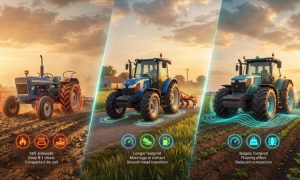
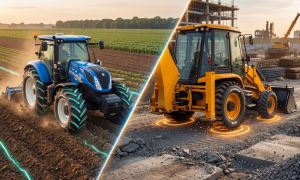
Traction tyres are ideal when the challenge is to break the soil and pull heavy implements forward. Flotation tyres are best when the challenge is to avoid sinking and keep the soil productive. Hard soils need more bite, soft soils need more care.
In India, both situations occur on the same farm within a year. During summer, black cotton soil becomes rock-hard. When the monsoon arrives, those same fields turn sloppy and sticky. One tyre alone cannot do everything well in such variable conditions.
That is why the decision should not be “traction or flotation?”. Instead, many farmers now look for tyres that offer a balance of the two.
Why Soil Compaction Matters in India
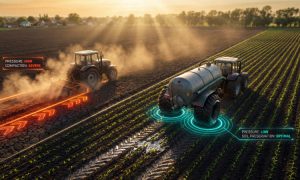
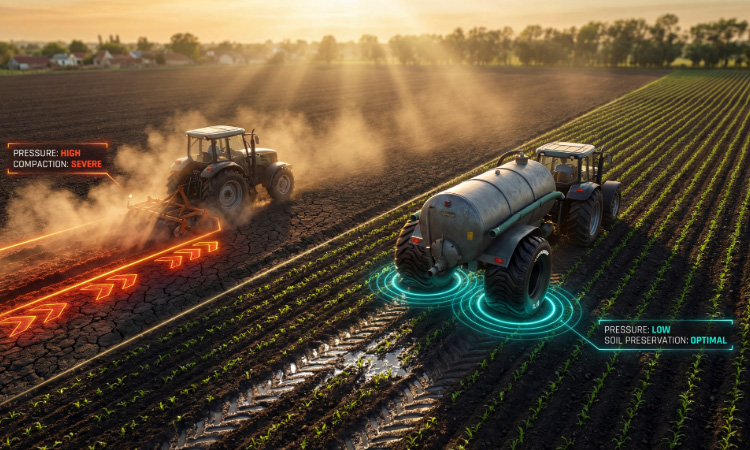
Soil compaction has become a silent threat to yields. Every time a tractor sinks into the soil, it squeezes the pore spaces that roots and water need to move. Over time, this leads to shallow roots, weaker plants, poor drainage, and reduced fertility.
India’s paddy-based regions suffer most from compaction because tractors run through fields during sowing, transplanting, spraying, and harvesting. Flotation tyres greatly reduce this damage by applying less pressure per square inch.
Even in high-productivity sugarcane belts like Karnataka and Maharashtra, reducing compaction during haulage can keep ratoon crops healthier for longer.
Bias vs. Radial vs. IF/VF
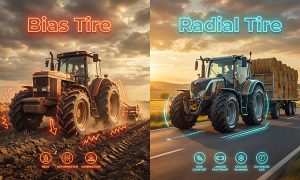
For decades, the Indian market was dominated by Bias tyres. They are tough, affordable, and have stiff sidewalls good for haulage. However, they are not great at flotation because they require high ag tyre air pressure for traction / flotation safety.
To solve the traction vs flotation ag tyres debate, we need to look at modern tyre technology.
1. Radial Tyres
Radial tyres have flexible sidewalls. This allows the tyre to “squat” slightly under load, creating a larger tyre footprint in agriculture. A larger footprint means more lugs are touching the ground at once (better traction) and the weight is spread out (better flotation).
2. IF and VF Technology
This is the cutting edge of low-ground-pressure tyres for farming.
- IF Tyres (Increased Flexion): These can carry 20% more load than a standard radial at the same pressure, or the same load at 20% less pressure.
- VF Tyres (Very High Flexion): These are even stronger. VF tyres (very high flexion) for ag allow you to carry 40% more load at the same pressure, or the same load at 40% reduced pressure.
Why does this matter for India? Imagine you have a heavy load of harvested grain. With a standard tyre, you must pump up the air pressure to carry that weight on the road. When you drive back into the soft field, that high pressure cuts deep ruts into your soil. With VF tyres, you can keep the pressure low. You get the load-carrying capacity for the road and the flotation needed for the field, without constantly changing air pressure.
How to Match Tyres to Indian Soil Types
Indian soils are diverse, and tyre choice must match ground behaviour:
- Loamy soils of Punjab & Haryana allow tractors to gain strong traction for tillage.
- Black cotton soils of Maharashtra & MP demand traction in summer but flotation after rain.
- Sandy and coastal zones of Gujarat require better flotation for mobility.
- Paddy soils of Bengal, Kerala, and Coastal Tamil Nadu always need flotation to prevent rutting.
Every farm has a unique combination of crop cycles and seasons this is why one-style tyres sometimes create problems.
Can One Tyre Do Both Jobs?
Many Indian farmers now want a tyre that supports good traction without harming soil when fields turn soft. Modern tyre designs make this possible. Deeper directional lugs maintain grip for tillage, while wider tread geometry spreads weight for earth protection. Self-cleaning features also mean the tyre can release mud quickly and continue moving.
This hybrid approach allows a single tractor to handle both field work and village road travel while limiting soil damage during monsoon.
Which Tyre Should Indian Farmers Choose?
If most of your work is deep tillage on dry, tough fields → traction tyres are best.
If most of your work is in paddy or loose sandy soil → flotation tyres are safest for your soil.
But most Indian tractors face a mix of ploughing, hauling, inter-cultivation, and field + road usage. That is why many farmers now prefer a tyre that provides traction and flotation together.
Conclusion
The question is no longer “Traction OR Flotation.” In modern Indian agriculture, you need both. You cannot afford to lose money on diesel due to wheel slip, and you cannot afford to lose crop yield due to compacted soil.
By moving towards Radial technology and understanding the benefits of soil compaction reduction tyres, you can protect your land for future generations while getting the work done today. Whether you call them floating tires or high-tech Radials, the goal is the same: Do more work, with less damage.
Frequently Asked Questions (FAQs)
What is the main difference between traction and flotation?
Traction is the grip that moves the tractor forward, essential for heavy pulling. Flotation is the ability to stay on top of the soil, essential for preventing sinking and soil damage.
Can I use flotation tyres for heavy haulage on Indian roads?
Yes, if they are designed for it. Modern radial flotation tires (like the AR 4005) are built to handle road speeds and loads. However, avoid using soft, pure-field flotation tyres on highways as they will wear out fast.
What are IF and VF tyres?
IF (Increased Flexion) and VF (Very High Flexion) are advanced tyre technologies. They allow tyres to carry heavier loads at lower air pressures. This gives you a massive “flotation” footprint without losing the ability to carry heavy loads.
Why is soil compaction bad for Indian farms?
Compacted soil becomes like concrete. It stops plant roots from growing deep and prevents rainwater from soaking in. This can lead to stunted crops and lower yields, which directly affects a farmer’s income.
How does air pressure affect traction and flotation?
Lower ag tyre air pressure increases the surface area of the tyre, improving flotation and traction in soft soil. Higher pressure is better for carrying heavy loads on hard roads. VF tyres help solve this by allowing low pressure even with heavy loads.