

Jed Soar
European Director - Technical Services & Product Performance
It's important to get it right from the start: Here is a Simple Guide to Correct Tyre Specification at the Point of New Tractor Purchase
Purchasing a new tractor is a major investment, and to get the most out of it, selecting the correct tyres is crucial. While it might seem like a straight forward choice, tyre specification has a profound impact on performance, efficiency, and cost-effectiveness over the life of the machine. The right tyres, tailored to the tractor’s intended applications and power requirements, can ensure maximum productivity, while the wrong choice could lead to underperformance, increased costs, and unnecessary downtime.
In this guide, we’ll break down the key factors every machinery dealer and farmer should consider when specifying tyres for a new tractor. Whether your work involves heavy ploughing, delicate cultivation, or frequent road use, this guide will help you make an informed choice that suits your operational needs.
Key Factors in Tyre Selection
When deciding on the tyre specifications for your new tractor, it’s essential to align the tyre choice with the tractor’s specific tasks. Depending on the primary functions – whether ploughing, cultivation, roadwork, or a combination – you’ll need to consider factors such as traction, load distribution, soil impact, and tyre longevity. Here’s how to make the right choice based on your application:
1. Ploughing: Optimum Traction in the Furrow
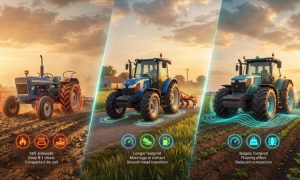
For tractors primarily used in ploughing, traction is the key consideration. When working within the furrow, you need tyres that provide a long footprint to grip the soil effectively, ensuring the tractor can pull heavy equipment through the field without slipping. In most cases, 75 and 85 series tyres are ideal for ploughing tasks, as these tyres feature a longer footprint that aids in traction.
For high-horsepower tractors (e.g., 350 horsepower and above), which are often required for large-scale ploughing, a tyre with a larger diameter rim, such as a 42-inch, may be necessary to handle the increased torque and stress. In addition, it’s crucial to match the tyre’s load-carrying capacity to the tractor’s power. If the tyres can’t handle the torque, particularly during heavy subsoiling operations, they will wear out prematurely, reducing their lifespan and potentially compromising your productivity.
Key considerations for ploughing tyres:
– Opt for tyres with a long footprint for maximum traction.
– Consider 75 and 85 series tyres for most ploughing tasks.
– For high-horsepower tractors, larger diameter rims (38–42 inches) may be required.
– Ensure the tyres can withstand high torque to prevent early wear and tear.
2. Cultivation: Minimizing Soil Impact
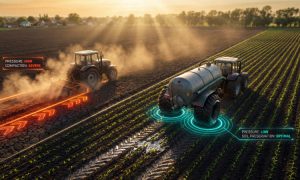
When performing cultivation tasks, the primary concern is soil health. Too much compaction can damage the soil structure, reducing yields and the quality of seedbeds. To mitigate this, tyres with a wider tread and lower sidewall profile are the best choice. By spreading the tractor’s weight over a larger surface area, you minimize soil compaction and preserve the integrity of your fields.
For cultivation, tyres in the 55, 60, 65, and 70 series profiles are ideal. These tyres offer wider tread widths while maintaining the same overall height as standard profiles like 75 or 85 series. The lower sidewall profile means these tyres can carry the same weight at lower inflation pressures, which reduces ground pressure and minimizes soil impact.
Key considerations for cultivation tyres:
– Select wider tyres with low sidewall profiles (55, 60, 65, and 70 series).
– Aim for tyres that spread the tractor’s weight effectively to reduce soil compaction.
– Ensure the tyre has a high load-carrying capacity at low inflation pressures to protect seedbeds and soil structure.
3. Roadwork: Prioritizing Durability and Comfort
For tractors that will frequently travel on roads, tyre selection should focus on durability, load capacity, and operator comfort. All tyre sizes are capable of handling roadwork to some degree, but low-profile tyres (75, 70, and 65 series) are typically better suited for this application. Their design helps reduce wear on hard surfaces, extending the life of the tyre and improving fuel efficiency.
In addition to durability, low-profile tyres also enhance driver comfort, making long road trips smoother and less fatiguing for the operator. One of the key benefits of choosing a low-profile tyre for roadwork is the potential increase in tyre life—up to 30% longer compared to standard profile tyres. This translates into reduced maintenance costs and fewer tyre replacements, offering long-term savings.
Key considerations for roadwork tyres:
– Low-profile tyres (75, 70, 65 series) are ideal for road use due to reduced wear and increased comfort.
– Tyres with lower profiles can last up to 30% longer on the road compared to standard profiles.
– Prioritize tyres that balance speed and load capacity for frequent road transport.
Tyre Profiles and Series Numbers
Tractor tyres are classified by their series number, which expresses sidewall height as a percentage of tyre width. For example, a “480/70 R38” has a 70 series profile—meaning the sidewall is 70 % of 480 mm. Lower-profile tyres (like 55 or 60 series) offer better stability and reduced rolling resistance, while higher-profile types (75 or 85 series) provide improved shock absorption for heavy draft work.
Understanding how series numbers affect load capacity, traction footprint, and ride quality helps match the tyre precisely to field and transport demands.
The Role of Inflation Pressure at Purchase
Setting the correct inflation pressure from day one is critical. Under-inflation causes sidewall flex and heat build-up; over-inflation increases soil compaction and uneven wear. Dealers should provide inflation charts based on axle weight and working speed.
During delivery checks, measure pressures with the machine fully ballasted and ready for use. Getting this right ensures the tractor’s tyres deliver their designed footprint, fuel efficiency, and comfort across ploughing, cultivation, and transport operations.
Technology Trends in Modern Agricultural Tyres
Today’s premium tyres use advanced materials and construction to enhance efficiency:
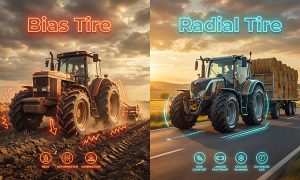
- Radial technology improves flexibility and reduces heat build-up.
- VF (Very High Flexion) designs allow up to 40 % lower pressure for the same load.
- IF (Improved Flexion) tyres bridge cost and performance for mid-range tractors.
Investing in these newer technologies at purchase increases traction, protects soil, and supports future precision-farming equipment compatibility.
Conclusion
Selecting the right tyres at the point of purchase is essential for getting the best performance from your new tractor. Each application—whether ploughing, cultivation, or roadwork—has unique requirements in terms of traction, load distribution, and tyre longevity. By carefully matching the tyres to the tasks your tractor will undertake, you can optimize its performance, reduce operational costs, and extend the lifespan of both the tyres and the machine.
Remember, tyre selection isn’t just about the initial cost. The correct tyres ensure that your tractor works efficiently, reduces the strain on your soil, and maximizes comfort during road transport. In the long run, the right tyre choice will protect your investment and keep your operations running smoothly for years to come. Whether you’re a dealer advising a customer or a farmer investing in new equipment, getting the tyres right from the start is critical to long-term success.
Frequently Asked Questions (FAQs)
Why is tyre specification important when buying a new tractor?
Tyre specification important when buying a new tractor because tyre choice determines traction, soil protection, ride comfort, and long-term operating cost from day one.
What do tyre series numbers like 70 or 85 mean?
They indicate the sidewall-to-width ratio. A 70-series tyre has a shorter sidewall and is better for road transport; an 85-series tyre gives deeper traction for fieldwork.
Can one tyre type suit all applications?
No. Ploughing needs deep-profile tyres for grip; cultivation benefits from wider, lower-pressure profiles; roadwork calls for low-profile, durable designs.
How do I know the right inflation pressure?
Use the manufacturer’s load-speed table or dealer recommendations. Always check pressures when tyres are cold and machine is ballasted as used in operation.
Are VF or IF tyres worth the investment?
Yes, these advanced designs reduce compaction and increase fuel efficiency, often paying back the price difference through longer life and improved yields.
Do tyre sizes affect fuel consumption?
Absolutely. Correctly matched tyres reduce slippage and rolling resistance, saving fuel while maximising drawbar power.