
Aron Calvin Vijaykhar
Global Product Manager | Marketing & Brand Management Head
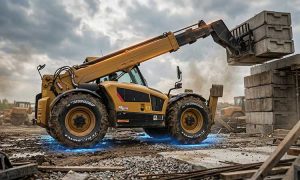
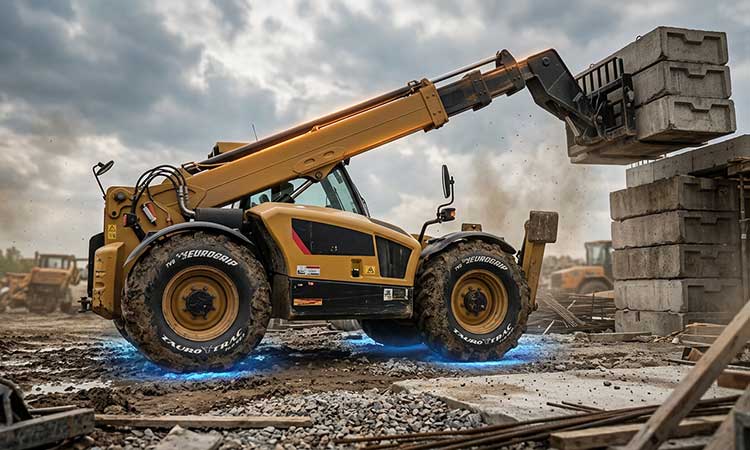
When it comes to versatile construction equipment, the telehandler is an undisputed champion. Combining the lifting capabilities of a forklift with the reach of a crane, this machine is a staple on job sites around the world. However, no matter how powerful the engine or how advanced the hydraulics, a telehandler’s performance is entirely dependent on its connection to the ground.
Choosing the right Telehandler Tires is a critical decision that impacts not only the efficiency of your project but also the safety of your operators. From slippery, rain-soaked mud to sharp gravel and hard concrete, the surfaces these machines traverse are incredibly unforgiving. Equipping your machine with the correct Industrial Tires for Telehandler applications ensures maximum traction, load stability, and machine lifespan.
In this complete guide, we will explore how these heavy-duty tires perform across various terrains, break down the different types of tires and machines available, and explain why upgrading your fleet with premium tires from TVS Eurogrip OHT is the smartest investment for your construction business.
What is a Telehandler and what about its Tires?
Before diving into surface performance, it is helpful to answer a basic question for new operators: what is a telehandler Tyre? To understand the tire, you must understand the machine.
A telehandler (telescopic handler) is essentially a highly advanced off-road forklift. People often search for a telehandler forklift Tyre or a forklift telehandler Tyre because the machines serve similar material-handling purposes. However, a telehandler has an extendable boom that can lift heavy loads forward and upward, drastically shifting the machine’s center of gravity.
Because of this shifting weight, Telehandler Tires are engineered differently than standard tractor or truck tires. They feature highly reinforced sidewalls to prevent the machine from swaying or tipping over when lifting a heavy pallet of bricks three stories into the air.
Performance in Deep Mud and Soft Soil
One of the most common and challenging environments for a construction site is mud. After heavy rain, an unpaved site can quickly become a trap for heavy machinery.
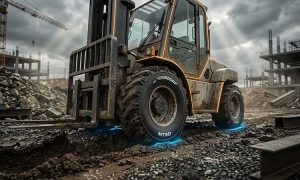
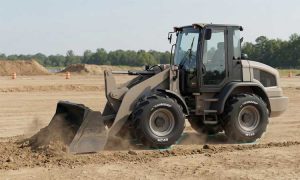
To conquer soft soil, you need the best telehandler tyres specifically designed for traction and flotation. Tires built for mud feature deep, aggressive tread patterns, often in a directional lug design. These deep lugs act like paddles, digging into the soft earth to pull the heavy machine forward.
Just as importantly, these Heavy-Duty Telehandler Tyres are engineered with self-cleaning properties. As the tire rotates, the flexing of the rubber and the wide spacing between the lugs force the mud to drop out. If the mud stays packed between the treads, the tire becomes a smooth slick, causing the machine to spin in place. TVS Eurogrip OHT designs its mud-focused telehandler tires with optimal void-to-lug ratios to ensure your machine never gets stuck, keeping your project on schedule.
Performance on Gravel and Rocky Terrains
Gravel pits, quarry sites, and early-stage construction zones present a completely different challenge: puncture and abrasion.
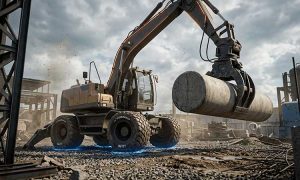
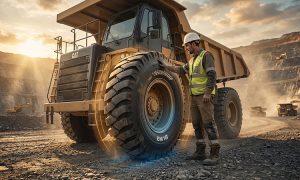
Driving over sharp rocks and loose gravel can quickly destroy a standard tire. For this environment, construction telehandler tyres must be manufactured using specialized, cut-and-chip resistant rubber compounds. The tread pattern for gravel is usually non-directional or block-style, providing a wide, stable contact patch that rolls smoothly over jagged stones without getting torn to pieces.
Puncture resistance is the top priority here. A blowout while carrying a heavy load on uneven gravel is a catastrophic safety hazard. TVS Eurogrip OHT addresses this by reinforcing the casing of their Telehandler Tires with multiple layers of high-tensile cords and steel belts. This robust construction ensures that sharp rocks and construction debris cannot penetrate the tire, maximizing your uptime and protecting your operators.
Performance on Hard Concrete and Asphalt
Many telehandlers spend their days in lumber yards, recycling centers, or large industrial warehouses where the ground consists of hard, abrasive concrete or asphalt.
While aggressive mud tires offer great traction in the dirt, they wear out incredibly fast on concrete. The deep lugs scrub against the hard surface, causing rapid rubber degradation and a very bumpy, uncomfortable ride for the driver. For these flat, hard surfaces, you need tires with a closed tread pattern or a block design that puts more rubber in direct contact with the ground.
In many industrial yard settings, telehandler solid tyres are the preferred choice. Because concrete yards are often littered with nails, metal scrap, and sharp wood splinters, pneumatic (air-filled) tires are at a high risk of going flat. A Solid Telehandler Tyre is completely puncture-proof, offering absolute peace of mind and zero maintenance downtime on harsh industrial concrete surfaces.
The telehandler market has expanded rapidly, and machines now come in various sizes for different applications. Matching the tire to the machine type is crucial.
Compact and Mini Telehandlers
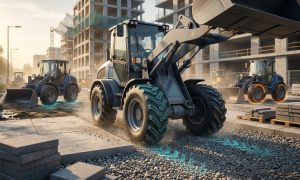
For tight urban construction sites, agricultural barns, or narrow warehouse aisles, contractors use a small telehandler. These machines require a specialized compact telehandler Tyre or a mini telehandler Tyre. While smaller in diameter, Small telehandler tyres must still bear immense weight relative to their size. They are designed for quick steering, high maneuverability, and minimal turf damage, making them perfect for light construction and landscaping.
Rotating Telehandlers
A rotating telehandler features a cab and boom that can spin 360 degrees, operating much like a crane. The tires for a rotating telehandler Tyre application must have exceptionally stiff sidewalls. Because the load can be swung over the side of the machine, the lateral (side-to-side) forces on the tires are massive. TVS Eurogrip OHT engineers ultra-rigid casings to ensure the machine remains perfectly stable during these 360-degree operations.
Top Picks: TVS Eurogrip Telehandler Tyres
At TVS Eurogrip OHT, we are a global leader in off-highway tire manufacturing. We understand that a telehandler is a multi-million dollar investment that needs to run smoothly every single day. We have engineered a range of Industrial Tires for Telehandler applications specific to the diverse needs of your sites. Let’s break down the heroes of our lineup.
The Advanced Radial Flagship
If your operation demands the very best in advanced radial technology, the Tauro trac TLB 504 stands out.
- Design: Robust radial construction engineered for an optimal footprint and even wear.
- Why Choose It: Offers superior traction, enhanced operator comfort, and exceptional longevity on mixed surfaces.
The "MT" Series Bias Range, For Versatile Heavy-Duty Options
2. MT 63 Series (Standard, HD, T, and L variants)
The MT 63 series ie., MT 63, MT 63 HD, MT 63T, MT 63L is extensively tested and designed for the modern job site that requires a mix of soft-soil traction and hard-surface durability.
- Design: Multi-angled lug pattern available in various heavy-duty configurations.
- Why Choose It: It is a reliable all-rounder that protects the casing from impact while providing excellent grip across diverse terrains.
When your operation shifts across various loose and packed terrains, the MT 72 keeps you moving safely.
- Design: Wide footprint featuring self-cleaning terraced tread blocks.
- Why Choose It: Ensures maximum stability during heavy lifting and prevents mud and debris retention in challenging conditions.
If your site is full of deep mud and soft soil, these tires MT 45 & MT 45 HD act as your armor.
- Design: Deep, directional lugs designed with an optimal void-to-lug ratio.
- Why Choose It: Built for environments demanding maximum grip and stability, acting like paddles to pull the machine through the toughest muck.
The "TG" Series Bias Range, For Traction & Stability
5. TG 18 & TG 09 (The Stability Specialists)
These TG 18 and TG 09 tires are the reliable choices for operations that require steadfast grip without compromising on machine stability.
- Design: Features a unique lug geometry that spreads heavy loads evenly.
- Why Choose It: Delivers essential lateral stability and reliable grip, which is crucial when extending the boom with heavy pallets.
The "RG" and "CR" Series, For Industrial Durability
If your telehandler spends its days on abrasive concrete or industrial yards, the RG 09 & RG 09 HD is built for you.
- Design: High solid-to-void ratio tread paired with a specialized wear-resistant compound.
- Why Choose It: Delivers exceptional wear resistance and smooth rolling on hard surfaces, drastically reducing vibration and rapid rubber degradation.
The ultimate tire for lumber yards, recycling centers, and paved environments.
- Design: Block-style tread design maximizing rubber contact with the ground.
- Why Choose It: Eliminates the rapid degradation typically seen in mud tires on concrete, ensuring a long, productive lifecycle in the toughest industrial applications.
When you equip your fleet with TVS Eurogrip OHT, you are guaranteed exceptional durability, unmatched stability, and the exact specification for your terrain, from mud to concrete.
Conclusion
The versatility of a telehandler is its greatest strength, allowing it to transition seamlessly from a muddy construction trench to a paved storage yard. However, to unlock this versatility safely and efficiently, you must invest in the right Telehandler Tires.
By understanding the unique challenges of mud, gravel, and concrete, and by matching your tires to the specific size and function of your machine, you can drastically reduce your operating costs. Protect your heavy machinery, ensure the safety of your site workers, and maximize your daily productivity by equipping your telehandlers with premium, heavy-duty tires from TVS Eurogrip OHT.
Frequently Asked Questions (FAQs)
What is the top telehandler tire brands comparison Trelleborg vs Michelin vs BKT?
Trelleborg, Michelin, and BKT are all prominent global brands, each offering premium telehandler tires. Michelin is famous for high-end radial longevity, while BKT offers excellent value-driven variety. However, TVS Eurogrip OHT stands out by offering a perfect balance of world-class, heavy-duty engineering and highly competitive pricing, delivering exceptional ROI for fleet managers.
What are the solid vs pneumatic telehandler tires pros and cons?
Pneumatic (air-filled) tires offer a comfortable ride, excellent shock absorption, and superior traction in mud and uneven dirt. Their con is the risk of punctures. Solid tires are 100% puncture-proof and incredibly stable, making them perfect for scrap yards and concrete. However, they offer a very harsh ride and poor traction in deep mud.
What are the best tire sizes for telehandlers like 400/70R24 or 13.00-24?
The size depends entirely on your machine’s specifications. The 400/70R24 is a highly popular, wide-profile radial size offering excellent flotation and stability for medium-to-large telehandlers on mixed terrain. The 13.00-24 is a traditional, robust size often used in bias-ply construction for heavy-duty, high-load industrial applications.
What are the maintenance tips for telehandler tires in rough terrain?
Always conduct a daily visual inspection before starting the engine. Look for deep cuts, chunks missing from the tread, or objects lodged between the lugs. Check the telehandler tyre pressure when the tires are cold to ensure optimal stability. Promptly clean off excessive mud to prevent it from hiding sidewall damage.
What is the recommended tire pressure for mud and gravel on telehandlers?
For mud, keeping the pressure at the lower end of the manufacturer’s recommended range increases the tire’s footprint, providing better flotation and traction. For gravel, you need higher pressure to stiffen the tire, preventing sharp rocks from flexing and cutting into the sidewall. Always refer to the TVS Eurogrip OHT technical databook for exact load-to-pressure ratios.