

Jed Soar
European Director - Technical Services & Product Performance
The evolution of tyre technology has brought significant advancements in the performance, safety, and durability of tyres, particularly in the Off-The-Road (OTR), Passenger Car Radial (PCR), and Truck and Bus Radial (TBR) sectors. One critical innovation in tyre design is the widespread adoption of tubeless tyres. Despite this, a lingering misconception persists among some users: the belief that inserting inner tubes into tubeless tyres provides additional protection against punctures and helps prevent the tyres from going flat quickly after the carcass is penetrated. This article seeks to explain why inner tubes should no longer be used in tubeless tyre applications, addressing the inherent dangers and inefficiencies associated with this practice, while debunking the myth surrounding the protective nature of tubes.
What Are OTR Tyre Tubes?
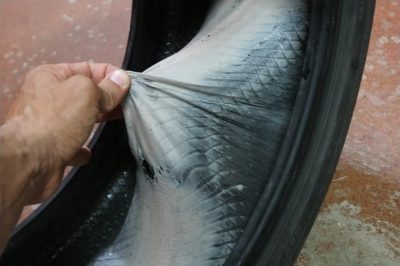
OTR tyre tubes are thick, heavy-duty rubber tubes traditionally used in large off-the-road (OTR) tyres for mining, construction, and industrial applications. They act as air containers within tubed tires, maintaining inflation inside the tyre casing.
However, modern OTR tyres are designed as tubeless, forming an airtight seal between the tyre bead and the rim. Adding a tube into this system interferes with heat dissipation and causes friction between the tube and tubeless tire liner. This friction creates localized hot spots, often leading to early tube failure.
While some older OTR tyre truck models were tube-type, the new generation of radial OTR tires are built to operate without tubes for greater stability and longevity, especially under high loads and variable terrain.
Evolution of Tubeless Tyre Technology
Tubeless tyres were introduced in the 1950s as a major advancement over traditional tube-type tyres. They are designed to form an airtight seal between the tyre and the wheel rim, eliminating the need for an inner tube. Over the years, tubeless tyre technology has proven its superiority due to several factors:
Improved safety: Tubeless tyres reduce the risk of sudden air loss, which can cause blowouts, and they offer better stability in case of punctures.
Enhanced efficiency: By eliminating the inner tube, tubeless tyres are lighter and more fuel-efficient.
Easier maintenance: Tubeless tyres are easier to repair since the puncture usually affects only the tyre and not an inner tube.
Despite these benefits, some operators in the OTR, PCR, and TBR segments still opt to use inner tubes in their tubeless tyres, believing that it offers an additional layer of security. In reality, this practice introduces several risks and inefficiencies.
What Does PCR, TBR and OTR Mean?
The tyre industry often refers to three major categories: PCR, TBR, and OTR. Each serves a specific purpose based on vehicle type and application.
PCR (Passenger Car Radial) tyres are used in passenger vehicles and light automobiles. These pcr automotive tyres are optimized for comfort, grip, and fuel efficiency. Modern tubeless car tyre designs dominate this segment.
TBR (Truck and Bus Radial) tyres are designed for commercial trucks, buses, and long-haul vehicles. TBR tires feature strong casings and steel belts, ensuring durability and retreadability for high mileage.
OTR (Off-The-Road) tyres are made for heavy-duty machines such as loaders, graders, and dump trucks. These tyres withstand extreme conditions like gravel, quarry, and mining terrain.
Together, these categories represent the full spectrum of tyre technology, from PCR automobile comfort to OTR truck tyre strength and OTR tyre service endurance.
1. Why Inner Tubes in Tubeless Tyres Are Dangerous?
A. Heat Build-Up and Blowouts
One of the key risks of using inner tubes in tubeless tyres is the increased potential for heat build-up. Tubeless tyres are engineered to manage heat dispersion efficiently by having direct contact between the tyre’s inner liner and the wheel rim. This setup allows for better heat dissipation as the tyre flexes under load.
Introducing an inner tube, however, disrupts this heat management system. The tube adds an additional layer between the tyre and the rim, leading to reduced heat dissipation and an increase in operating temperatures. In heavy-duty applications, such as OTR and TBR vehicles, this heat build-up can become extreme, particularly when vehicles are carrying heavy loads or traveling at high speeds. Excessive heat not only degrades the rubber components but also increases the risk of blowouts, which can be catastrophic in industrial or commercial settings.
B. Friction Between the Tube and Tyre
Another significant danger is the friction that occurs between the inner tube and the inner surface of the tyre. Since the inner tube is not permanently fixed to the tyre, it can shift and rub against the inner liner during operation. This friction generates additional heat and wears down the inner surfaces of both the tyre and the tube. Over time, this wear can lead to premature failure of the tube, creating sudden and unpredictable air loss. This type of failure is especially dangerous in OTR and TBR applications where vehicle control is critical to safety. Expert technicians would always use French chalk to help reduce tube in tire issues but this is not a practice we see today unfortunately.
C. Increased Risk of Pinch Flats
Inner tubes are highly susceptible to pinch flats. This occurs when the tube is pinched between the tyre and the rim, especially if the vehicle is driven over rough terrain or if it experiences sudden impacts. Pinch flats can result in rapid air loss and render the tyre unusable. Tubeless tyres, on the other hand, are specifically designed to withstand such impacts, making them more resilient in harsh conditions. The air pressure is uniform throughout the inner of the tire helping to prevent rim movement, an issue often seen in forestry where tubes are widely used allowing wood chips and dirt to become trapped between rim and the bead of the tire. This is due to the tube not being able to create enough pressure to the bead area due to its shape and ability to fully mold itself to the inner contour of the tire and rim.
2. Dispelling the Myth: Tubes Don’t Prevent Punctures
A common misconception is that using inner tubes in tubeless tyres helps prevent punctures or slows down the rate at which air escapes after a puncture. This belief is not only inaccurate but also dangerous, as it gives operators a false sense of security.
A. How Punctures Affect Tubeless Tyres
When a puncture occurs in a tubeless tyre, the air loss is typically gradual, especially if the puncture is minor. This is because tubeless tyres are designed to maintain their structural integrity even with small perforations. In many cases, the puncture may even seal itself if the object remains lodged in the tyre. This slow air loss provides the operator with enough time to stop the vehicle safely and address the issue before a total failure occurs.
B. How Punctures Affect Tube-Type Tyres
In contrast, when a tubed tyre is punctured, air escapes from the tube quickly, often resulting in rapid deflation. The inner tube can collapse almost immediately after the puncture, causing the tyre to go flat and increasing the likelihood of a blowout. The inner tube, in this case, actually becomes a liability rather than a protective measure. Moreover, repairing a tubed tyre is more complicated since both the tube and the tyre need to be inspected and repaired, leading to longer downtimes and higher costs.
C. False Security of Inner Tubes
The notion that inner tubes somehow add a layer of protection from punctures is rooted in a misunderstanding of tyre technology. Tubeless tyres are designed with advanced materials and engineering to minimize the impact of punctures and improve longevity. The addition of an inner tube does nothing to enhance these properties. In fact, using an inner tube in a tubeless tyre can mask the true condition of the tyre, delaying necessary repairs and potentially leading to more severe failures down the line.
3. The Dangers of Using Inner Tubes for Tyre Repairs
Some operators mistakenly believe that adding an inner tube to a damaged tubeless tyre is a viable solution to avoid replacing the tyre. This is a dangerous and unreliable method for several reasons:
A. Compromised Structural Integrity
When a tubeless tyre is damaged, its structural integrity is already compromised. Adding an inner tube does not restore the tyre’s original strength or ability to handle the demands of its application. In fact, inserting a tube may conceal the true extent of the damage, leading to further degradation and increasing the likelihood of sudden tyre failure.
B. Inappropriate Temporary Fix
While adding an inner tube to a damaged tyre may seem like a quick fix, it is, at best, a temporary solution. Tubed tyres are not as robust as tubeless ones, especially in OTR and TBR applications where heavy loads, high speeds, and extreme environmental conditions are common. Relying on such a fix can cause serious safety issues, including blowouts, rollovers, and vehicle control loss.
C. Legal and Warranty Issues
Many tyre manufacturers strongly advise against using inner tubes in tubeless tyres or using inner tubes as a repair method. Doing so can void any manufacturer warranties and may not meet legal safety standards. In industries where safety regulations are stringent, improper tyre repairs can result in penalties or fines, as well as increased liability in the event of accidents.
OTR Tyre Tubes for Heavy-Duty Vehicles
Heavy-duty vehicles, particularly in mining and construction, require tyres capable of sustaining extreme pressure, torque, and temperature. Using inner tubes in tubeless OTR tires increases risks instead of improving safety.
When an OTR tyre operates with a tube, friction between the tube and casing creates heat pockets, weakening the rubber layers. This can cause sudden deflation or even tread separation. Furthermore, OTR tyre service teams often note that tube installation limits the self-sealing ability of modern tubeless vs tube tires, increasing downtime and replacement costs.
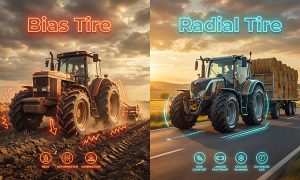
To achieve better results, operators should choose the correct tubeless tyre design for their machinery type and ensure proper rim compatibility. For example, radial OTR tires outperform bias designs by distributing heat more effectively and handling higher loads with minimal deformation.
What Is a Tubeless Tire?
A tubeless tire is engineered to hold air between the rim and inner liner without needing a separate tube. The airtight seal eliminates friction, improves cooling, and ensures gradual air loss in case of puncture.
Tubeless vs tube tires show a clear performance gap. Tubeless tyres are lighter, safer, and easier to repair. Unlike tubed tires, they also support advanced tubeless car tyre and OTR tyre truck systems that withstand high load and temperature stress.
Understanding what is tubeless helps operators avoid mixing technologies. Placing a tube in tubeless tire design disrupts the seal, increases rolling resistance, and negates the advantages of tubeless tires, particularly in commercial or heavy-equipment applications.
Conclusion: Inner Tubes Have No Place in Modern Tubeless Applications
The continued use of inner tubes in tubeless tyres for OTR, PCR, and TBR applications is not only outdated but also dangerous. Tubeless tyres are specifically engineered to operate efficiently, safely, and effectively without the need for inner tubes. Introducing an inner tube in a tubeless tyre increases the risks of heat build-up, friction damage, and sudden air loss, all of which can result in catastrophic tyre failure.
Furthermore, the belief that inner tubes provide extra protection against punctures is a myth. In reality, tubes are more susceptible to rapid deflation and do not improve puncture resistance. Instead, operators should focus on proper tyre maintenance, regular inspections, and timely repairs using appropriate methods for tubeless tyres.
By eliminating inner tubes from tubeless tyre applications, operators can enhance safety, improve performance, and reduce overall costs. It’s time to embrace modern tyre technology and leave inner tubes behind.
Frequently Asked Questions (FAQs)
What is TBR in tyres?
TBR stands for Truck and Bus Radial, referring to tyres used on heavy commercial vehicles. TBR tires feature steel belts and thick sidewalls for long-distance durability and load handling.
What is an OTR tyre?
OTR tyres (Off-The-Road) are used on heavy construction and mining machinery. They provide traction, impact resistance, and long tread life on rough surfaces.
Can I use a tube inside a tubeless tyre?
It’s not recommended. Adding a tube in tubeless tire design increases heat, friction, and blowout risks, shortening the tyre’s life.
What are the advantages of tubeless tyres over tubed ones?
Tubeless tyres are safer, lighter, and offer better fuel efficiency. They resist sudden air loss, reduce heat buildup, and make puncture repairs easier.
What is the difference between OTR, PCR, and TBR tyres?
PCR tyres are for passenger cars, TBR tyres for trucks and buses, and OTR tyres for off-road and construction vehicles. Each is engineered for unique performance demands.
Can tubeless tyres be repaired easily?
Yes. Unlike tubed tires, a punctured tubeless tyre usually deflates slowly and can often be repaired without removing the tyre from the rim.