
Jed Soar
European Director - Technical Services & Product Performance
In recent years, the agricultural tyre industry has seen a notable shift, particularly in the quality distinction between premium and premium budget radial tyres. Historically, premium tyres were in a league of their own, offering superior performance, durability, and efficiency, while budget options were seen as a compromise, sacrificing some aspects of quality for cost savings. However, recent advancements in tyre manufacturing technologies have significantly reduced the gap between these two categories. Today, the focus is increasingly on the technical support that manufacturers provide, especially in optimizing tyre pressures to maximize performance and productivity.
The Premium vs. Budget Premium Spectrum
The distinction between premium and budget premium agricultural tyres is no longer purely about brand prestige. Today, both segments use similar radial designs, advanced belt materials, and tread geometries to maximize traction and durability. The primary difference often lies in engineering precision and the after-sales ecosystem that supports each product.
Premium radial tyres tend to feature optimized rubber chemistry, uniform sidewall stiffness, and extensive field-testing data to fine-tune pressure recommendations. In contrast, budget premium tyres now leverage shared manufacturing platforms and licensed technologies that close much of the historical performance gap.
For farmers, the decision increasingly comes down to application intensity: high-horsepower tractors and continuous operations still benefit from top-tier compounds, while lighter or seasonal work can rely confidently on budget premium alternatives. The market’s shift has encouraged healthier competition and made quality more accessible than ever.
Narrowing the Quality Gap
One of the most significant developments in the tyre industry has been the improvement in manufacturing processes and materials used in budget premium tyres. Advances in rubber compounds, carcass construction, and design technologies have allowed manufacturers to produce tyres that approach the quality of their premium counterparts at a lower price point. This means that the performance differences that once separated premium from budget premium tyres have become less pronounced.
For instance, innovations like improved sidewall flexibility, enhanced tread designs for better traction, and advanced carcass materials for greater load-bearing capacity are now common in both premium and budget premium tyres. As a result, the durability, wear resistance, and fuel efficiency of budget premium tyres have significantly improved, making them a viable option for many farmers who previously would only consider premium brands.
The Growing Importance of Technical Support
As the quality gap has narrowed, the focus has shifted to another critical aspect of tyre performance: technical support, particularly in the area of application pressures. Proper inflation is essential to maximizing the efficiency, lifespan, and performance of agricultural tyres. Incorrect pressure can lead to uneven wear, increased fuel consumption, and reduced traction, all of which can impact a farm’s productivity and profitability.
Twenty years ago, premium tyre manufacturers recognized the importance of technical support in this area, providing detailed guidelines and personalized advice on tyre pressures based on the specific conditions of the farm, the type of machinery, and the tasks being performed. However this support seemed to wain as Ag tyre specialists retired or even moved out of the business, only leaving a few who were passionate in optimizing agricultural tyre efficiency.
Application Pressures: The Key to Maximizing Performance
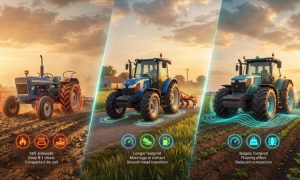
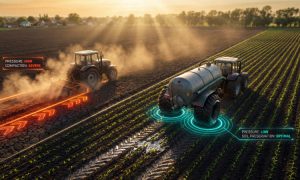
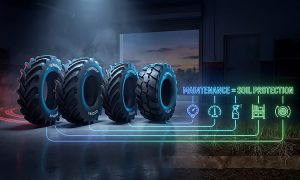
The relationship between tyre pressure and performance cannot be overstated. Properly inflated tyres ensure optimal contact with the ground, which is crucial for minimizing soil compaction, maximizing traction, and ensuring even wear. As tyres have become more advanced, the importance of getting this aspect right has only increased.
Manufacturers now offer a range of tools and services to help farmers monitor and manage tyre pressures. These include mobile apps, on-site consultations, and advanced pressure monitoring systems that provide real-time data. Such tools are invaluable for farmers looking to get the most out of their tyres, whether they are using premium or budget premium options.
Moreover, some manufacturers are developing increasingly sophisticated pressure management technologies that automatically adjust tyre pressures based on load, speed, and terrain. This level of innovation highlights the fact that the real value in a tyre purchase is not just in the product itself, but in the ongoing support and technology that comes with it.
Digital Pressure Management and Smart Farming Integration
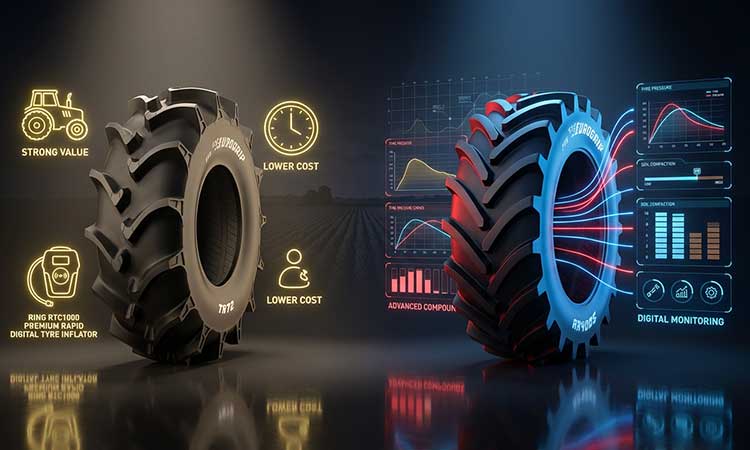
Digital tools are reshaping how operators manage tyre pressure and field performance. Manufacturers are introducing Bluetooth-enabled pressure sensors, app-based monitoring systems, and even automatic inflation units that link to tractor ISOBUS data.
These innovations allow real-time adjustment of agricultural radial tyres, reducing compaction during fieldwork and increasing stability during transport. For mixed-fleet farms, centralized dashboards now store each tyre’s ideal pressure range, historical readings, and service alerts.
Key advantages of connected systems:
• Accurate pressure calibration for multiple soil types
• Lower fuel consumption through optimized rolling resistance
• Early detection of slow leaks or valve issues
As farming becomes more data-driven, integrating tyre monitoring with telematics and yield-mapping software will become standard practice, turning tyres from passive components into active contributors to precision agriculture.
Factors Influencing Long-Term Value
When comparing brands, long-term cost of ownership provides a truer picture than purchase price. Important considerations include tread life, warranty support, downtime risk, and technical service accessibility.
1. Tyre Longevity: Regular maintenance and correct inflation can extend service life by 15–25 %. Premium tyres often last longer, but the margin narrows when budget models are properly managed.
2. Fuel Efficiency: A correctly specified radial reduces rolling losses, particularly under heavy tillage or transport loads.
3. After-Sales Support: Direct manufacturer engagement through digital service portals or field engineers helps farmers apply the right pressure and load balance, safeguarding both tyres and soil.
The modern buyer therefore evaluates not just the product, but the partnership that comes with it. In this evolved market, technical guidance and responsive service deliver as much value as the tyre’s rubber itself.
What Distinguishes Quality Tyres from Inexpensive Tyres?
The contrast between premium tyres and budget tyres goes deeper than pricing. Premium options use advanced compounds, refined tread geometry, and strict quality control to ensure consistent grip, cooler running, and longer wear life. Budget tyres, though more affordable, often rely on simpler materials or wider production tolerances, which can shorten service intervals under heavy loads.
Engineering and Material Quality
High-end agricultural and OHT brands design best premium tyres with multi-layer belts, reinforced bead zones, and heat-resistant polymers that handle higher torque and longer duty cycles. In comparison, best budget tyres are optimized for moderate use—ideal for secondary tractors or lighter implements where extreme endurance is not critical.
The Value of Premium Tyre Service
A key advantage of top-tier brands lies in their premium tyre service network. Expert technicians guide operators on load-pressure ratios, field versus road inflation, and rotation schedules. This after-sales assistance ensures the tyres deliver full rated performance, translating the higher purchase cost into lower total operating expense.
Balancing Cost and Maintenance
Even cheap premium tyres can outperform if properly maintained. Using precision tools such as the Ring RTC1000 Premium Rapid Digital Tyre Inflator keeps pressures accurate, minimizing wear and fuel loss. Ultimately, the budget vs premium tyres choice depends on workload intensity, support availability, and commitment to maintenance—because real value emerges from efficiency, not just the initial invoice.
Conclusion: A New Paradigm in Tyre Selection
The agricultural tyre market has evolved significantly, with the quality distinction between premium and budget premium tyres becoming less pronounced. This shift has led to a new paradigm where the value of a tyre is increasingly determined by the technical support that accompanies it, particularly in the management of application pressures.
For farmers, this means that the decision between premium and budget premium tyres is no longer just about upfront cost versus quality. It’s about choosing a manufacturer that offers the best overall package, including the tools and support needed to optimize tyre performance in the field. As a result, the focus is now on long-term value, where the quality of technical support and the ability to maximize tyre performance are just as important as the tyres themselves.
Frequently Asked Questions (FAQs)
What defines a premium agricultural radial tyre?
Premium tyres use advanced compounds, multi-layer carcasses, and extensive testing to deliver maximum traction, stability, and lifespan.
How have budget premium tyres improved recently?
Enhanced manufacturing processes and shared technologies have reduced gaps in durability, grip, and fuel efficiency, making them strong value options.
Do premium tyres always outperform budget ones?
Not necessarily. Under moderate workloads and with proper tyre pressure management, many budget premium radials can deliver comparable results.
How does tyre pressure affect performance and soil protection?
Correct pressure ensures even load distribution and minimizes compaction. Under-inflation raises fuel use; over-inflation harms soil and wear balance.
Are digital monitoring systems worth adopting?
Yes, real-time pressure management tools prevent premature wear, improve safety, and support precision farming analytics
What’s the best way to choose between premium and budget tyres?
Assess working hours, load intensity, service support, and total operating cost. The best tyre is the one delivering sustained efficiency and reliable after-sales guidance.