
Jed Soar
European Director - Technical Services & Product Performance
When it comes to purchasing a new tractor, the word “horsepower” often takes center stage. It’s one of the primary factors that farmers and operators consider, symbolizing the raw power that a tractor can deliver. However, the true story goes much deeper than just horsepower. Along with high horsepower typically comes high torque, a critical component generated by the engine and transmitted to the wheels through the transmission. While horsepower might be the headline, torque is the workhorse, and it plays a crucial role in the performance and efficiency of your tractor, especially during heavy-duty tasks.
One aspect that is often overlooked during the tractor specification process is the impact of torque on the tractor’s tires, especially during demanding tasks like heavy cultivation. Many times, the tire size recommended by a sales configurator—based on weight-carrying capacity and speed—may technically meet the criteria but fall short in real-world applications. This discrepancy can lead to underperformance and higher operating costs, making it essential to consider torque and tire compatibility from the outset.
Difference Between Horsepower and Torque in Tractors
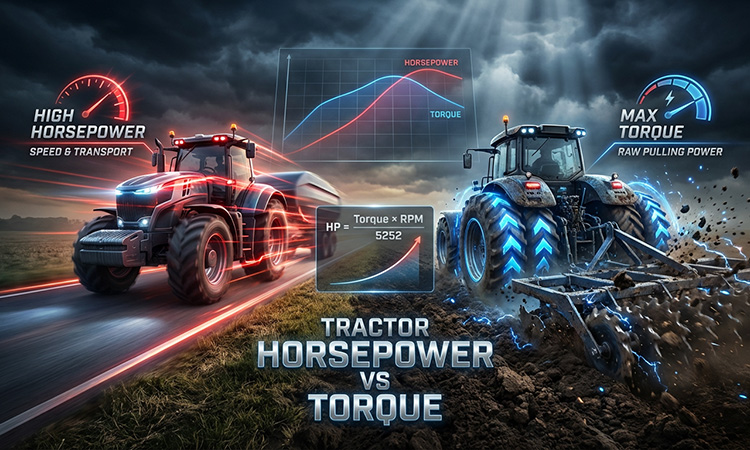
In simple terms, horsepower measures how fast work is done, while torque measures the pulling force that does the work. Both are closely related horsepower is derived from torque using the formula:
Horsepower (HP) = (Torque × RPM) / 5252
A tractor with higher torque at low RPM delivers strong pulling power for heavy soil or deep tillage, while higher horsepower at higher RPM improves speed and transport efficiency. For instance, a 6.7 Powerstroke horsepower and torque ratio emphasizes torque delivery at low speeds for towing, whereas an F-150 5.0 horsepower and torque setup favors balanced power for acceleration.
In agriculture, tractor horsepower isn’t the only indicator of performance; torque defines how effectively that power converts into traction. Choosing a tractor without analyzing both can result in underperformance during heavy operations.
The Importance of Consulting a Farm Tyre Specialist
The initial sales consultation is a critical opportunity to align your new tractor’s capabilities with its intended use. This is where your local Farm Tyre Specialist can make a significant difference. By understanding your tractor’s future roles-whether it’s ploughing, subsoiling, or other high-torque operations- your specialist can recommend the right tires not just for load-carrying capacity but also for optimal rim specifications and overall speed requirements.
A thorough consultation can prevent costly mistakes. For example, selecting a tire from a configurator might seem convenient, but if that tire needs to operate at its maximum recommended inflation pressure for tasks like ploughing, it could lead to premature wear and inefficiency. Instead, a larger, higher-capacity tire option, carefully selected with the help of a specialist, can improve tractive force, reduce slip, and ultimately enhance your tractor’s performance and longevity.
The VF Advantage
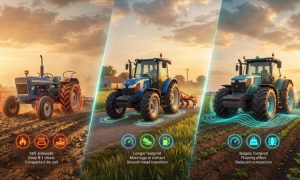
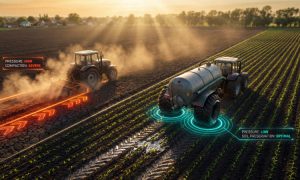
Consider this: opting for a more robust VF tire, it has the ability to significantly alter the power-to-slip curve of your tractor. While this tire might not be a standard option and could increase the initial purchase cost of the tractor, the long-term benefits far outweigh the upfront investment. VF tyres are designed specifically for tractors with over 200 horsepower and features the ability to operate at much lower inflation pressures for cultivation than their standard counterparts. VF can be operated at upto 40% lower pressure ensuring that valuable torque is efficiently transferred to the tread area of the tire where it is needed most.
Moreover, VF tires are generally rated for speeds up to 70 kph and have a 40% higher carrying capacity compared to their standard counterparts. This makes them ideal for high-torque operations, where the demands on tires are at their peak. By reducing slip, enhancing fuel efficiency, and minimizing transmission wear, VF range can save you time and money in the long run, making it a wise investment for serious agricultural professionals.
Tyre Selection for Terrain & Soil Protection
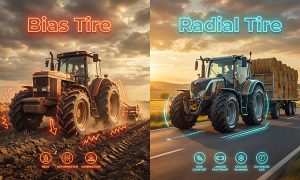
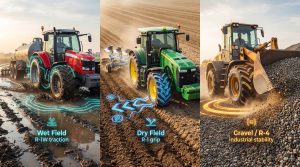
When matching a tractor’s horsepower vs torque to the right tyres, it’s important to align tyre patterns, construction, and flexion capability with your working conditions. Below is a quick comparison of some TVS Eurogrip agricultural tyres, designed for specific terrains and torque loads.
Tractor & Agricultural Tyre Selection Chart
Tyre Pattern | Type | Category | Ideal Terrain / Use Case | Key Benefits |
|---|---|---|---|---|
AR4005 | R-1W | Radial | Medium to heavy soil, wet conditions | High traction under high torque, excellent self-cleaning |
HS3000 | R-1W | Radial | All-round farm operations | Reinforced lugs for torque transfer and even wear |
AR600 | R-1W | Radial | Dry soil & ploughing | Lower rolling resistance, higher fuel efficiency |
AR700 | R-1W | Radial | Mixed farming and transport | Balanced footprint for reduced soil compaction |
AR800 | R-1W | Radial | Heavy tillage, sub-soiling | Superior torque handling and rim protection |
HS1000 | R-1 | Radial | Wet clay and soft terrain | Greater sidewall flexion for torque-heavy applications |
RC900 | R-1 | Radial | Row crop farming and cultivation | Large-scale farming, economical option with strong lug grip |
FL909 | I-3 | Radial | Field transport and trailers | Smooth ride, minimal soil disturbance |
FL900 | I-3 | Radial | Field transport and trailers | Smooth ride on fields and roads |
How to Choose the Right Tyre for Your Torque Load?
High Torque Operations (Heavy Draft Work)
→ Choose R-1W or VF tyres like AR 4005, HS 3000, or AR 800 for maximum grip and flexion.
Transport and Mixed Applications
→ Go for AR 700 or FL 909, which balance traction and speed efficiency.
Wet & Clay-Rich Fields
→ HS 1000 provides deeper lug penetration, reducing slippage and improving fuel economy.
Best Tractor Tyre for High Torque Operations
For tractors designed to deliver high torque at low RPM, tyre choice becomes critical. Farm specialist tires with strong bead construction and advanced rubber compounds handle twisting forces without deformation.
VF and IF tyres are particularly effective, they operate at lower pressures, increase footprint size, and maximize traction on soft ground. This design minimizes slippage and energy loss, helping convert torque power vs horsepower into real pulling strength.
When operating on asphalt or during road transport, switch to semi tractor trailer tires or durable radial options with high-speed capacity to balance performance and longevity. Always consult a tyre specialist to ensure correct inflation for torque-intensive fieldwork.
CONCLUSION
In the world of tractors, horsepower might grab the spotlight, but torque and tire selection are the unsung heroes that determine whether your investment will meet your expectations. By consulting with a Farm Tyre Specialist and considering high-performance options like VF you can ensure that your tractor is not just powerful but also efficient, reliable, and cost-effective over its lifetime. Remember, the right tires can transform your tractor’s performance, turning horsepower into productive power on the field.
Frequently Asked Questions (FAQs)
What is the difference between horsepower and torque?
Torque is the twisting force that moves your tractor; horsepower measures how fast that force can perform work. Both must be balanced for efficient performance.
Does more horsepower always mean better pulling power?
Not necessarily. Torque vs horsepower depends on application; high torque is ideal for ploughing and heavy tillage, while high horsepower suits transport and PTO-driven tools.
How can I calculate horsepower from torque?
Use the formula: Horsepower = (Torque × RPM) / 5252. You can also use a torque and horsepower calculator to compare engine ratings.
What are examples of real engine outputs?
A 6.7 Powerstroke horsepower and torque output offers massive low-end torque for towing, while an F-150 5.0 horsepower and torque balance suits versatile performance. Similarly, the 3.5 EcoBoost horsepower and torque pairing focuses on efficiency with higher mid-range torque.
Which tyres are best for high-torque tractors?
Farm specialist tires and VF tyres ensure maximum traction, soil protection, and longevity under torque-intensive work.
Do larger tractor tyres increase power?
Larger tyres don’t increase power but improve torque utilization by reducing slip and increasing footprint, especially useful on heavy or wet soil.
How much horsepower should my farm tractor have?
For small farms, 70–100 HP is sufficient; for large implements or deep tillage, 150–250 HP offers optimal balance of speed and torque.