
Aron Calvin Vijaykhar
Global Product Manager | Marketing & Brand Management Head
In the mining industry, uptime is everything. Whether you are extracting coal, copper, or gold, the materials need to move. If the trucks stop, the revenue stops.
While we often focus on the massive engines or hydraulic systems of mining equipment, the unsung heroes of the operation are the black round things touching the ground: the truck and mining tyres.
These are not just oversized car tires. They are feats of engineering capable of carrying hundreds of tons of rock over the sharpest, hottest, and most unforgiving terrain on Earth. Understanding the specific role of these tires—and choosing the right ones—can save a mining operation thousands of dollars in downtime and replacement costs.
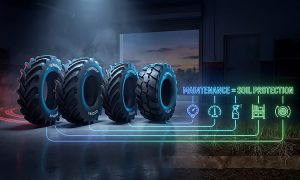
In this guide, we will explore the critical functions of mining tyres, the difference between open cut mining tyres and underground mining tyres, and the technology that keeps them rolling.When you are buying new rubber for your tractor, the price tag is often the first thing you look at. We get it. Tires are a major expense. When you see a bias-ply tractor tyre listed for significantly less than a radial one, it is tempting to save the cash and stick with the “old reliable” technology.
But in modern agriculture, the “cheaper” tire often ends up costing you more.
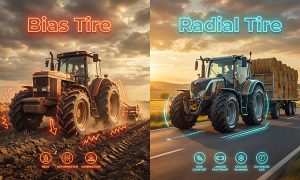
The debate of Radial vs Bias is not just about rubber construction; it is about farm profitability. While bias tires have served us well for decades, radial tires are better for your tractor in almost every performance category that matters: traction, fuel efficiency, and soil health.
In this guide, we will break down the differences between radial vs bias tyres, explain why the upgrade pays for itself, and help you decide if it is time to make the switch.
The Three Critical Roles of a Mining Tyre
To understand why radials perform better, you have to look inside the tire.
1. Massive Load Bearing
The primary role of earthmoving tyres is to support weight. A fully loaded rigid dump truck can weigh over 500 tons. The tires must support this crushing load without bursting or deforming permanently. This requires incredibly strong casings, often reinforced with steel belts and heavy-duty nylon plies.
2. Traction in Harsh Conditions
Mining roads are rarely paved. They are made of crushed rock, mud, loose gravel, or slick clay. Truck and mining tyres must provide enough grip to push a massive load up steep haul roads (often with 10-12% grades) without spinning. If the tires slip, fuel is wasted, and the tread is sliced to shreds by sharp rocks.
3. Shock Absorption
Mining trucks generally do not have the sophisticated suspension systems found in passenger cars. The tire is the suspension. It absorbs the shocks from loading (when tons of rock are dropped into the bed) and the bumps from uneven haul roads. This protects the driver and the expensive mechanical components of the truck.
Open Cut vs. Underground
Not all mining tyres are created equal. The environment dictates the design.
Open Cut Mining Tyres (Surface Mining)
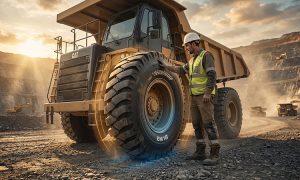
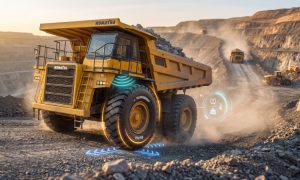
In open cut mining tyres, the biggest enemy is heat. Surface mines involve long haul roads where trucks travel at higher speeds (up to 30-40 mph) for longer distances.
- The Challenge: As the tire rolls under heavy load, it builds up internal heat. If it gets too hot, the rubber can separate, leading to catastrophic failure.
- The Design: Surface earthmoving tyres often use heat-resistant rubber compounds (Types E3 or E4) and tread patterns designed to dissipate heat while resisting cuts from loose rock.
Underground Mining Tyres
Underground mining is a different beast. Here, the enemy is confined space and physical damage.
- The Challenge: Tunnels are narrow, dark, and littered with sharp debris. Speed is low, but the risk of sidewall cuts and impact damage is extremely high.
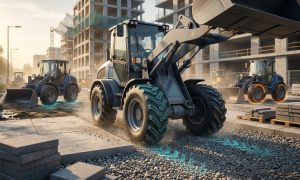
- The Design: Underground mining tyres (often classified as L-series for loaders) prioritize “cut and chip” resistance over heat resistance. They have extra-thick sidewalls and deep treads (L4 or L5) to survive scraping against tunnel walls and driving over jagged ore.
The Technology
Modern mining truck tyres are highly engineered products. To handle the extreme demands, manufacturers use specialized technologies.
Compound Chemistry
The “recipe” of the rubber changes based on the job.
- Cut-Resistant Compounds: Used for rocky, slow-moving operations. Soft enough to envelope sharp rocks but tough enough not to tear.
- Heat-Resistant Compounds: Used for high-speed haulage. Harder rubber that runs cooler but might be more susceptible to cuts.
Mining Truck Tyre Monitoring
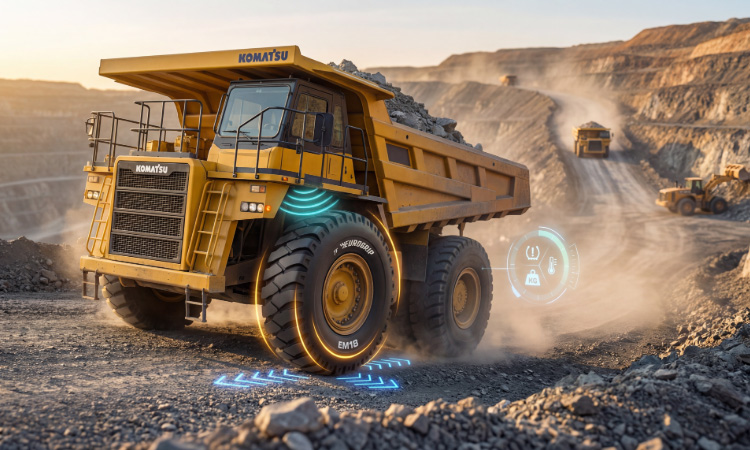
One of the biggest advancements in the industry is mining truck tire monitoring systems (TPMS). Because these tires are so expensive (some costing as much as a luxury car), you cannot afford to run them flat. Monitoring systems use sensors inside the tire to track:
- Real-time Air Pressure
- Internal Temperature
- Speed and Load data
This allows fleet managers to spot a slow leak or an overheating tire before it blows out, preventing accidents and saving the casing for retreading.
How Mining Tyre Design Impacts Productivity?
The design of a mining tyre directly affects how efficiently equipment operates. Tread depth, lug pattern, and rubber compound influence traction, heat resistance, and wear rate.
A well-designed tyre helps:
- Reduce wheel slip
- Improve braking control
- Lower fuel consumption
- Maintain consistent cycle times
Over months of operation, these benefits translate into significant cost savings and higher output.
3 Tips to Maximize Tyre Life
Buying the right truck and mining tyres is only step one. To get the best Return on Investment (ROI), you need to manage them.
- Maintain Haul Roads: The number one killer of mining tyres is spillage on the road. A single sharp rock dropped from a truck can slice a tire on the next pass. keeping roads graded and clear is essential.
- Pressure Management: As mentioned with mining truck tire monitoring, maintaining the correct inflation pressure is non-negotiable. Under-inflation causes heat buildup (leading to blowouts), while over-inflation leads to impact breaks and uneven wear.
- Load Management: Overloading a truck might move more dirt per trip, but it reduces tire life drastically. Respect the TKPH (Ton-Kilometer-Per-Hour) rating of your tires to avoid heat separation.
TVS Eurogrip OHT tyres for Mining and Earthmoving
TVS Eurogrip OHT manufactures truck and mining tyres to meet the demanding requirements of mining and heavy earthmoving operations. With a focus on strong casing construction, cut-resistant compounds, and optimized tread designs, these tyres are built to perform in harsh conditions.
Their tyre solutions are suitable for open-cut mines, underground applications, and heavy construction sites where reliability and uptime are critical.
By combining global engineering standards with region-specific insights, TVS Eurogrip OHT supports operators looking for dependable tyre performance across challenging environments.
Conclusion
The role of Truck and Mining Tyres is simple yet vital: they carry the weight of the industry. Without reliable earthmoving tyres, the mines close, construction stops, and production halts.
Whether you are running deep underground mining tyres or high-speed surface haulers, choosing the right tire involves balancing heat resistance, cut protection, and load capacity. By partnering with a manufacturer like TVS Eurogrip, you ensure that your fleet stays moving, your costs stay down, and your operation stays safe.
Frequently Asked Questions (FAQs)
What is the difference between E3, E4, and L5 tires?
These codes refer to tread depth and application.
- E3: Standard tread depth for earthmovers (haul trucks). Good heat resistance.
- E4: Deep tread (150% of E3) for better protection and longer life, but runs hotter.
- L5: Extra-deep tread (250%) for loaders. Used in extremely sharp/rocky conditions like underground mining tyres.
How long do mining tyres last?
It varies wildly based on conditions. A tire in a soft soil application might last 5,000 hours. A tire in a sharp, hard-rock copper mine might only last 1,500 hours. The goal is to maximize “hours of service” through maintenance.
Can mining tyres be retreaded?
Yes. Large earthmoving tyres have massive casings that can often be retreaded if they haven’t been structurally damaged. This is a key way mines reduce costs and environmental impact.
Why are mining tires so expensive?
They are massive (some weigh 10,000 lbs), contain huge amounts of natural rubber and steel, and are engineered to strict safety standards. The manufacturing process for a single mining truck tire can take days.
Does TVS Eurogrip make tires for underground mining?
TVS Eurogrip offers a range of OTR tires suitable for various mining applications. While many patterns like the EM 18 are excellent for surface and construction use, specific suitability for deep underground tasks depends on the machinery. Always check the “Load and Inflation” tables to match the tire to your specific loader or truck.