
Aron Calvin Vijaykhar
Global Product Manager | Marketing & Brand Management Head
The world of construction is changing rapidly. Contractors are increasingly looking for machinery that can perform multiple tasks, travel quickly between job sites, and operate efficiently in tight urban spaces. While tracked machines have dominated the heavy machinery landscape for decades, a highly mobile and versatile alternative is rapidly gaining popularity: the Wheeled excavator.
If you are a fleet manager or a contractor looking to upgrade your heavy equipment, deciding between wheels and tracks is a massive financial and operational choice. This Wheeled excavator construction equipment offers unique benefits that can drastically speed up your project timelines and reduce transport costs.
In this comprehensive guide, we will explore everything you need to know about this highly adaptable machine. We will look at how it works, its advantages, the various attachments you can use, and how to choose the right one for your business. Furthermore, we will explain why equipping your machine with premium tyres from TVS Eurogrip OHT is the ultimate way to guarantee site safety and efficiency.
What is a Wheeled Excavator?
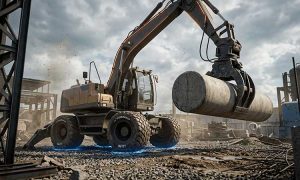
A wheeled excavator is a hydraulic machine essential for digging, earthmoving, and material handling in construction and mining. Brands manufacture high-performance earthmoving equipment that highlights the core definition of this machine: an excavator that runs on heavy-duty rubber tyres rather than steel tracks.
Simply put, an excavator on wheels functions exactly like a traditional tracked excavator. It features a rotating upper structure (the house), a boom, an arm, and a bucket. However, the undercarriage is completely different. By replacing heavy steel tracks with an advanced wheeled undercarriage, the machine gains road-legal mobility.
An excavator with wheels does not need to be loaded onto a heavy transport trailer to move from one side of a city to another. It can be driven directly on paved roads at speeds up to 35 km/h. This makes a wheel excavator incredibly useful for utility work, road maintenance, and urban construction where machines must move frequently without damaging the asphalt.
The Working Mechanism of the Machine
Understanding the Wheeled excavator working mechanism helps operators maximize its potential. The core power of this machine comes from a massive diesel engine that drives a complex hydraulic system.
The hydraulic system pumps pressurized fluid to various cylinders and motors, which allows the boom to lift heavy loads, the arm to dig into the earth, and the bucket to scoop materials. However, what makes the Wheeled excavator working mechanism unique is its stabilization system.
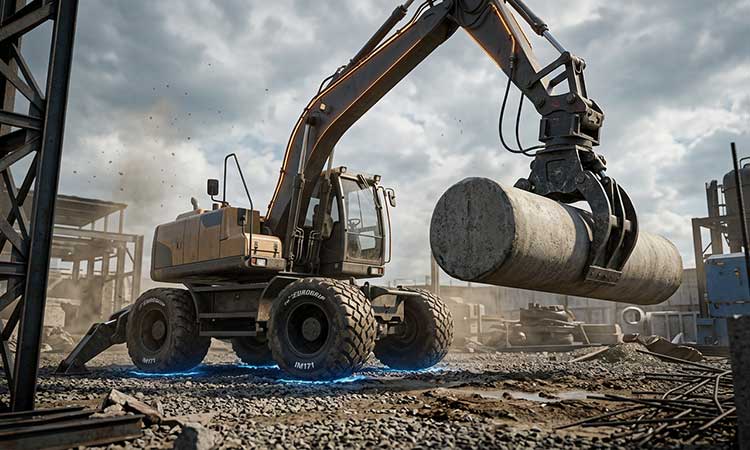
Because rubber tyres naturally bounce and compress under heavy loads, an excavator on wheels requires additional support when digging. To solve this, the machine is equipped with hydraulic outriggers (stabilizer legs) and a dozer blade. When the operator reaches the digging site, they lower the outriggers and the blade to the ground. This lifts the tyres slightly off the ground, creating a solid, rigid base that allows the machine to lift massive weights without tipping over.
Why are so many contractors switching to rubber tyres? The Wheeled excavator advantages are numerous and can directly impact your project’s profitability.
1. Superior Mobility and Speed
The biggest advantage is speed. If you have a project that spans a long highway or requires working at multiple locations in a single day, an excavator with wheels can simply drive there. You save thousands of dollars on truck-and-trailer transport costs.
2. No Damage to Paved Surfaces
Steel tracks tear up asphalt and concrete. If you are doing municipal utility work or repairing a city street, using a tracked machine requires laying down protective mats. A wheel excavator drives on rubber, leaving paved surfaces completely undamaged.
3. Increased Versatility
These machines are the Swiss Army knives of the construction site. Because they can move quickly, they are often used as material handlers, lifting and moving heavy pallets or pipes across a large yard, replacing the need for an additional forklift.
Wheeled Excavator vs Crawler Excavator
The debate of Wheeled excavator vs crawler excavator comes down to the specific ground conditions of your job site.
Crawler Excavators (tracked excavators) are built for raw digging power in terrible conditions. Their long, wide steel tracks provide a massive footprint, allowing them to crawl over deep mud, steep hills, and loose sand without sinking. If you are clearing a raw forest or digging a foundation in a swamp, you need a crawler.
On the other hand, the Wheeled excavator is built for finished or semi-finished surfaces. It excels on concrete, asphalt, compacted dirt, and gravel. While it can handle mild off-road conditions, it will get stuck in deep, wet mud where a crawler would easily pass.
For many contractors, the ideal fleet includes a mix of both: Crawler Excavators for the initial heavy earthmoving, and wheeled machines for the utility, finishing, and roadwork phases.
Attachments and Customization
The true power of any Wheeled excavator construction equipment lies in its attachments. By changing the tool at the end of the boom, you can completely change the machine’s purpose.
One of the most popular attachments for roadwork and trenching is the excavator compaction wheel. After a trench is dug and a pipe is laid, the dirt must be packed down tightly. A compaction wheel for excavator allows the operator to drive the wheel deep into the trench, rolling back and forth to compact the soil quickly and safely. Using an excavator compaction wheel is much faster and safer than sending a worker down into the trench with a hand-operated rammer.
Other common attachments include hydraulic breakers (for smashing concrete), grapple hooks (for moving scrap metal or logs), and tilt-rotators, which allow the bucket to spin 360 degrees for incredibly precise digging.
Extreme Machines and High-Power Models
While most contractors use standard 15-to-20-ton machines, the world of wheeled excavators includes some incredible variations.
For instance, when people hear the term “power wheels,” they might think of a child’s excavator power wheels toy. However, in the industrial world, a true Power Wheel excavator refers to a machine with specialized, high-torque hydrostatic wheel drives designed to push through incredibly tough terrain. Leading brands like Caterpillar produce highly sought-after machines; a caterpillar wheel excavator is known globally for its immense power, reliability, and advanced hydraulic technology.
On the absolute extreme end of the scale is the bucket wheel excavator. While this does not look like a standard construction machine, it is technically an excavator. Used in massive open-pit mining operations, the biggest bucket wheel excavator features a massive rotating wheel of buckets that continuously scoops up coal or minerals. These mega-machines are the largest land vehicles on the planet, weighing thousands of tons.
Buying Guide for Contractors
If you are ready to invest in a Wheeled excavator, here is a simple buying guide to help you choose the right machine:
- Assess Your Job Sites: Do you work mostly on urban streets, or in muddy fields? If you work on hard surfaces, wheels are perfect. If you work in deep mud, look into Compact Excavators with rubber tracks instead.
- Check the Operating Weight: Machines typically range from 10 to 20 tons. A heavier machine can dig deeper and lift more, but a lighter machine is more agile in tight city streets.
- Evaluate the Stabilizers: Make sure the machine has robust outriggers and a high-quality dozer blade. The stability of the machine depends entirely on these parts.
- Brand and Support: Choosing a recognized brand like a caterpillar wheel excavator ensures that you can easily find spare parts and qualified mechanics when the machine needs maintenance.
The Importance of High-Quality Tyres
A Wheeled excavator is a heavy, powerful machine that carries massive dynamic loads when the boom is swinging. The entire weight and safety of the machine rest on its tyres. Using cheap, standard tyres will lead to excessive bouncing, dangerous instability, and frequent punctures on debris-filled construction sites.
This is exactly why leading contractors rely on TVS Eurogrip OHT. As a premier manufacturer of Off-Highway Tyres, we produce world-class tyres engineered specifically for wheeled excavators. Our EX 54 and MT 54 models are designed to meet the rigorous demands of these machines. When you equip your excavator with these TVS Eurogrip OHT tyres, you guarantee:
- Extreme Stability: Reinforced, stiff sidewalls prevent the machine from swaying when lifting heavy loads, ensuring maximum safety for the operator.
- Puncture Resistance: Advanced rubber compounds resist cuts, chunking, and tears from sharp rocks and scrap metal.
- Superior Traction: Aggressive tread patterns provide excellent grip on loose gravel and compacted dirt, preventing the machine from slipping while digging.
Conclusion
The Wheeled excavator is a modern engineering marvel that brings unparalleled mobility, speed, and versatility to the construction site. By eliminating the need for expensive transport trailers and protecting paved surfaces from damage, these machines offer a massive return on investment for utility contractors and urban developers.
By understanding the Wheeled excavator working mechanism, selecting the right attachments like a compaction wheel for excavator, and matching the machine’s size to your daily tasks, you can dramatically improve your fleet’s productivity. Most importantly, remember that this powerful machine is only as stable as the rubber it stands on. By equipping your equipment with heavy-duty, premium tyres from TVS Eurogrip OHT, you ensure that your excavator performs safely and efficiently, no matter how demanding the job site becomes.
Frequently Asked Questions (FAQs)
Wheeled vs tracked excavators comparison?
Tracked excavators (crawlers) use steel tracks to provide maximum traction and stability in deep mud, swamps, and rough terrain. Wheeled excavators use heavy-duty rubber tyres, allowing them to drive quickly on paved roads without causing damage. Wheels are best for urban and utility work, while tracks are best for raw earthmoving.
Top wheeled excavator brands and models 2026?
In 2026, the market is led by highly reliable and technologically advanced machines. Top choices include the Caterpillar M318, known for its incredible hydraulic power; the Volvo EW160E, famous for its fuel efficiency and operator comfort; and the Hydrema MX series, which offers exceptional agility in tight city spaces.
Key specs to check when buying wheeled excavator?
Always check the machine’s operating weight, maximum digging depth, and lifting capacity. Additionally, evaluate the stabilization system (ensure it has robust outriggers and a dozer blade), road travel speed, and hydraulic flow rate to ensure it can power heavy attachments like an excavator compaction wheel.
What are the maintenance tips for wheeled excavators?
Daily maintenance is crucial. Always grease the boom, arm, and bucket pins. Check hydraulic fluid levels and inspect hoses for leaks. Most importantly, maintain proper tyre pressure and inspect your TVS Eurogrip OHT tyres for deep cuts or uneven wear, as damaged tyres severely compromise the machine’s digging stability.
Cost comparison wheeled excavator vs tracked?
A wheeled excavator typically has a higher initial purchase price due to the complex wheeled undercarriage, steering systems, and brakes. However, wheeled machines save money long-term by eliminating the need for heavy transport trailers and trucks to move them between nearby job sites, making them highly cost-effective for roadwork.