

Aron Calvin Vijaykhar
Global Product Manager | Marketing & Brand Management Head
A modern Indian construction site is a loud, chaotic environment. Every single morning, massive transport trucks arrive at the gates to deliver mountains of raw supplies. They drop off thousands of tons of river sand, crushed granite, heavy steel pipes, and massive bags of cement. However, simply delivering the supplies to the main gate is only half the battle. If those massive piles of rock and sand just sit there, the builders cannot do their actual work.
To turn raw materials into a skyscraper or a new metro station, site managers must overcome the massive logistical challenge. You must move the right materials to the exact right location at the perfect time. Achieving high material handling efficiency requires a special breed of heavy machinery. While excavators dig holes and cranes lift steel into the sky, the true workhorse of the supply yard is the wheel loader. This complete guide explores how these powerful machines dictate the speed of your entire project.
The Basics of Site Logistics
Many new project managers ask, what is material handling? To run a profitable business, you must understand the basic material handling definition. It is the total process of moving, protecting, storing, and controlling materials throughout your entire job site.
When you look at massive material handling equipment in construction site environments, you see a constant, organized flow. In a massive concrete mixing plant in Pune, the gravel cannot sit far away from the cement mixer. It must be transported quickly and constantly. Good material handling solutions organize the work yard so that machines travel the shortest possible distance to fetch supplies. If a machine has to drive a full mile just to pick up a single scoop of sand, you waste valuable daylight and expensive diesel fuel. The ultimate goal is to reduce travel distance and increase the speed of each delivery cycle.
The Power of the Wheel Loader
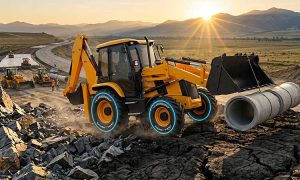
When it comes to pure wheeler material handling, the wheel loader is the undisputed king of the dirt yard. These machines are built entirely for the “scoop and carry” mission. Unlike a slow excavator that stays in one place, a wheel loader uses massive rubber tyres to zip quickly across the work zone.
Understanding wheel loader productivity in construction requires looking at a strategy called the “V-pattern.” When a massive dump truck needs to be filled with sand, the dump truck parks at an angle near the sand pile. The wheel loader drives forward into the sand, fills its massive front bucket, reverses in a straight line, and then drives forward into the dump truck to drop the load. The driving path looks exactly like the letter “V”.
This simple V-pattern creates incredibly efficient material handling using wheel loaders. A skilled Indian operator can complete this cycle in less than thirty seconds. The machine uses a special joint in the middle of its body, known as articulated steering, to turn sharply in very tight spaces. This sharp turning ability means the loader can fill a massive transport truck in just a few quick scoops, sending the supplies on their way without causing a traffic jam in the yard.
Smart Yards and Equipment Choices
As Indian projects grow larger, companies are looking for faster ways to manage their massive supply piles. Today, the industry is slowly moving toward automated material handling technologies. Modern wheel loaders now feature smart digital scales built directly into their lifting arms.
When the bucket scoops up a pile of crushed stone, the computer instantly weighs the load. The operator knows exactly how many tons of stone they are dropping into the dump truck. This prevents the dump truck from being dangerously overloaded, which saves the truck tyres from exploding on the highway.
However, many smaller contractors try to save money by purchasing used material handling equipment. While a used machine is cheaper upfront, it comes with massive hidden risks. Used loaders often suffer from weak hydraulic pumps. If the hydraulic system is old and weak, the bucket lifts very slowly. A slow bucket destroys your daily cycle times. If your loader takes twice as long to fill a truck, your material handling equipment becomes a bottleneck that starves the rest of the construction site of the supplies it desperately needs.
Safety and Hazardous Cargo
Moving dry sand is relatively easy. However, an Indian work site is often full of dangerous chemicals and toxic waste. You must know exactly how to handle hazardous materials on a construction site to protect your human workers and the local environment.
Sometimes, a crew must remove contaminated soil from an old industrial factory before they can build a new apartment complex. Wheel loaders are the perfect tool for this dangerous job. The operator sits safely inside a sealed, air-conditioned glass cab, completely protected from toxic dust and harmful chemical smells.
Proper material handling and storage on construction site rules demand that hazardous cargo is moved quickly and smoothly. You cannot allow a loader to bounce violently over a rough dirt path when its bucket is full of dangerous chemical waste. If the machine bounces, the toxic waste will spill from the bucket and contaminate the site’s clean areas. To prevent dangerous spills, the site manager must ensure the haul paths are perfectly flat and that the loader is equipped with premium tyres that absorb violent shocks.
Top TVS Eurogrip OHT tyres for the Fleet
To achieve maximum efficiency, you must equip your loaders with specialized rubber. TVS Eurogrip OHT builds premium, severe-duty tyres engineered specifically for the brutal reality of Indian material yards. Our engineers focus on aggressive traction, total stability for heavy lifting, and massive cut resistance. Here are the top TVS Eurogrip OHT choices for your wheel loader fleet.
For massive wheel loaders working in heavy crushed stone yards, the EM 27 L-3 is the ultimate weapon. It features an incredibly thick, heavy rubber base. When the loader rams its bucket into a granite mountain, this tyre provides a rock-solid grip. It completely stops the wheels from spinning. Furthermore, the specialized L-3 rubber compound withstands the intense friction of scraping against sharp rock piles all day, ensuring a long lifespan for your busiest machine.
Compact wheel loaders are essential for tight urban projects, like a new metro station in Bengaluru. These small loaders zip around narrow concrete pillars to deliver pallets of bricks. The MT 45 HD (Heavy Duty) is built exactly for this agile work. It features an aggressive tread pattern that provides excellent forward traction on loose gravel, but it is also tough enough to handle sharp, sudden turns on hard concrete floors without the rubber lugs tearing away.
A general material supply yard is often littered with stray nails, sharp metal banding straps, and broken glass. The BL 09 acts like heavy steel-toed boots for your loader. It features a highly reinforced nylon casing designed specifically to stop sudden punctures. By deflecting sharp debris away from the internal air chamber, this tyre drastically reduces the risk of sudden flat tyres, ensuring your loader never stops moving supplies during a busy shift.
Sometimes, a wheel loader must carry a full bucket of supplies across a massive, sprawling project site. If the tyre is stiff and bouncy, the supplies will spill everywhere. The BL 90 features a specialized footprint with a massive central block. This unique design provides an incredibly smooth, stable ride when driving long distances. It absorbs the bumps of the dirt road, keeping the heavy bucket perfectly level so you do not lose your valuable materials along the way.
When a wheel loader lifts a massive bucket of heavy wet concrete high into the air to dump it over a wall, the center of gravity changes drastically. The machine becomes top-heavy and dangerous. The BL 36 is built with incredibly stiff, reinforced sidewalls. These strong sides prevent the tyre from squishing or bending under extreme vertical weight. It provides massive lateral stability, preventing the heavy loader from tipping sideways and protecting the operator inside.
Conclusion
A successful construction project is a masterclass in organization. The bricks, steel, and sand will not move themselves. To keep your highly skilled builders working quickly, you must feed them supplies at a consistent, reliable rate. The absolute secret to true material handling efficiency is matching smart site planning with powerful, reliable machinery.
Equip your massive fleet with premium TVS Eurogrip OHT tyres today. Their highly specialized rubber compounds provide the extreme pushing traction and lifting stability your loaders require. Choose TVS Eurogrip OHT, conquer your material yard, and finish your massive building projects exactly on schedule.
Frequently Asked Questions (FAQs)
What is the basic material handling definition?
It is the organized process of moving, storing, protecting, and controlling raw supplies and finished products throughout a job site. Good material handling ensures the right items reach the right workers safely and quickly.
How do wheel loaders improve material handling efficiency?
Wheel loaders use a fast “scoop and carry” method. Because they drive on rubber tyres and use a special hinge to turn sharply, they can load massive amounts of heavy rock or sand into transport trucks in just a few seconds.
Why is wheel loader productivity in construction tied to tyre grip?
To fill a bucket, the loader must push hard into a pile of dirt. If the tyres are weak, they slip and spin on the ground. Premium tyres grip the earth tightly, allowing the loader to push forward and fill the bucket completely on the very first try.
How to handle hazardous materials on a construction site using loaders?
Operators must drive smoothly on flat, graded paths to prevent the toxic materials from bouncing out of the bucket. The loader’s enclosed glass cab safely protects the driver from inhaling hazardous chemical dust during transfer.
What is the danger of using used material handling equipment?
Used machines often have weak or damaged hydraulic pumps. This causes the lifting arms to move very slowly, disrupting the daily loading schedule and causing massive delays throughout the construction project.