
Aron Calvin Vijaykhar
Global Product Manager | Marketing & Brand Management Head
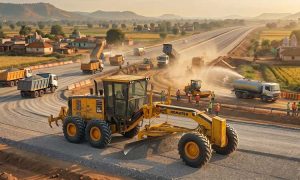
India is experiencing a massive infrastructure revolution. Massive earthmovers and deep excavators clear the path, but a dirt path is not a highway. To connect the vast nation, builders must lay a perfect, smooth black ribbon of pavement. This final, critical step completely transforms a rough, dusty work zone into a modern, high-speed travel route. To achieve this, construction crews rely on one highly specific piece of machinery.
Understanding the true role of asphalt pavers in road construction reveals the incredible science behind the roads we drive on every single day. The asphalt paver in road construction is the final brushstroke on a massive masterpiece. It does not dig, and it does not haul. Its only job is to lay down a precise, smooth, and level layer of hot material. This complete guide will explore exactly how an asphalt paver machine operates under the harsh Indian sun.
The Core Anatomy of the Machine
To understand the asphalt paver machine function, you must look inside it. A paver is actually a mobile factory that processes material as it drives forward. It is built with three main asphalt paver parts that must work together perfectly.
First is the front hopper. This is a large metal bucket at the very front of the machine. A massive dump truck backs up to the paver and slowly tips its load of hot, black mix directly into this hopper. Second is the conveyor system. Hidden beneath the machine’s floor, heavy metal chains drag the hot mix from the front hopper to the back of the machine.
Third, and most importantly, is the screed. The screed is a heavy, flat, heated metal plate attached to the very back of the paver. As the hot material drops onto the ground, the screed drags over it. It flattens the material, smooths it out, and provides the initial pressure to pack it down tight. If the screed is cold or dirty, the road will have ugly tears and bumps. Every single piece of highway paving equipment relies on the screed to deliver a perfect final product.
Machine Types for Different Routes
India has an incredibly diverse road network. You will find tiny, narrow streets in ancient cities and massive, wide expressways connecting state capitals. Because the roads vary widely, builders must use different types of asphalt pavers.
The Tracked Crawler
For heavy highway construction, such as the massive expressway projects connecting Delhi to Mumbai, companies use tracked pavers. Instead of rubber wheels, these machines move on long, heavy metal tracks, similar to a military tank. Tracks provide maximum grip on the loose gravel base layer. They can easily push a massive dump truck forward while paving an incredibly wide, straight section of the highway without slipping.
The Wheeled Paver
For city streets or smaller rural routes, companies prefer wheeled pavers. These machines use large rubber tyres. They drive much faster than tracked machines, making them perfect for projects where the machine must move quickly between neighborhoods. They are highly maneuverable and do not destroy the existing curbs or street corners when they turn sharply. While a homeowner might worry about the cost to pave driveway with asphalt, massive construction firms worry about selecting the exact right machine to maximize their daily speed and profit.
The Demand for Perfect Smoothness
A road must be perfectly flat. If there is a dip in the surface, the heavy Indian monsoon rains will form a massive puddle. When a fast car hits that puddle, the driver loses control. To prevent this, the asphalt paver benefits in road projects are heavily tied to computer precision.
Today, builders use modern asphalt paver technology to guarantee perfection. Automatic asphalt paver systems use laser beams and sonic sensors to read the ground ahead. The computer tells the paver exactly how thick the asphalt layer needs to be at every single millimeter. If the dirt base has a slight dip, the paver automatically lays down a thicker layer of mix to level the top surface.
This level of precision is an absolute requirement for modern highway construction paving equipment. The government sets strict rules for smoothness. If the final road is bumpy, the construction company is forced to rip it all up and start over, which costs crores of rupees in wasted time and materials.
The Extreme Heat Hazard
Paving a road is one of the hottest, most uncomfortable jobs in the world. An asphalt concrete paver does not use cold dirt. The black mix arrives from the factory at temperatures exceeding 150 degrees Celsius. It is literally smoking hot.
When you combine the heat of the boiling asphalt with the intense heat of the peak Indian summer, the environment becomes hostile to both humans and iron machines. The entire “paving train” must work perfectly together to beat the heat. The paving train consists of the dump truck, the paver, and the heavy steel rollers that follow behind to flatten the road.
If the paver breaks down, the hot asphalt sitting in the dump trucks will quickly cool off and harden into a solid, useless rock. The entire supply chain must never stop moving. This means the support equipment around the paver, the water trucks, the loaders, and the transport vehicles must have absolutely perfect reliability. A broken support machine will halt the paver, ruin the asphalt batch, and destroy the daily schedule.
Top TVS Eurogrip OHT tyres for the Worksite
The asphalt paver is the star of the show, but it cannot work alone. It requires a massive fleet of support machines to prepare the ground, deliver the materials, and compact the final surface. These support machines face brutal conditions, driving over sharp gravel bases and hot, sticky surfaces.
TVS Eurogrip OHT builds premium, severe-duty tyres engineered specifically to handle the extreme heat and sharp hazards of Indian road projects. Here are the top TVS Eurogrip OHT choices to keep your entire paving operation moving forward.
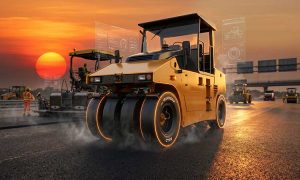
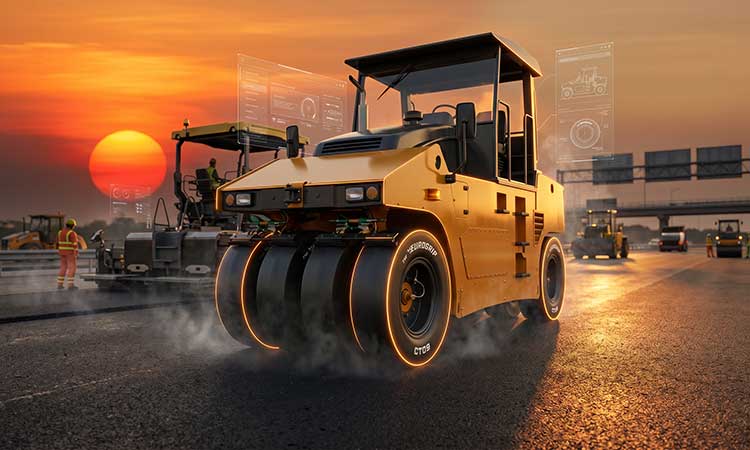
Directly behind the paver, heavy machines called asphalt rollers must crush the hot mix into a solid, permanent road. The CT 09 is a C-1 Asphalt Roller tyre built entirely for this specific job.
- Design Focus: It features a completely smooth, flat tread surface with no deep grooves.
- Why It Excels: A normal tyre with deep treads would leave ugly marks in the fresh, hot pavement. The smooth CT 09 distributes ground pressure perfectly equally across the tyre. More importantly, it uses a specially formulated rubber compound designed to withstand extreme heat without melting, while discouraging hot, sticky asphalt from adhering to the tyre surface.
Asphalt rollers require a constant spray of water onto their steel drums so the hot asphalt does not stick to the metal. Industrial tractors constantly pull massive, heavy water tanks up and down the work zone to supply these rollers.
- Design Focus: The TI 18 PLUS features a highly reinforced sidewall and a strong R-4 tread pattern.
- Why It Excels: Pulling a sloshing, heavy water tank requires massive lateral stability. The stiff sidewalls of this tyre keep the tractor perfectly balanced, even when driving on the new highway’s uneven, sloped shoulder. It provides reliable, everyday strength for the most critical supply task on the site.
Before the asphalt ever reaches the road, it must be mixed at the factory. Hot Mix Plants use massive wheel loaders to scoop up crushed stone and dump it into the heating bins.
- Design Focus: This L-3 tyre is built for extreme earthmoving and material handling.
- Why It Excels: The loader at the factory must constantly scrape its tyres against sharp piles of crushed rock all day long. The EM 27 L-3 features exceptional cut resistance and a heavy, durable base. It survives the constant, violent friction of the rock yard, ensuring the paver out on the highway never runs out of fresh material.
Compact wheel loaders are used right next to the paver to scoop up excess dirt, move heavy traffic barriers, and clean the gravel base before the blacktop is laid.
- Design Focus: The MT 45 HD (Heavy Duty) features a strong R-4 tread designed for maximum grip on loose surfaces.
- Why It Excels: The gravel base layer of a highway is very loose and difficult to drive on. This tyre bites firmly into the unpaved stone, giving the loader the strong pushing power it needs to quickly clear obstacles out of the paver’s path without spinning its wheels and wasting time.
- Design Focus: The MT 63 is an MPT (Multi-Purpose Tyre) built for high versatility.
- Why It Excels: A mechanic must drive fast on the newly paved, smooth highway, but then transition instantly onto sharp, jagged dirt to reach a broken machine. This tyre runs smoothly and coolly at high speeds on the pavement, but its tough rubber blocks provide the necessary grip and puncture protection when the truck enters the rough, unfinished dirt zones.
Conclusion
Laying a brand new Indian highway is a magnificent feat of engineering. The dirt work provides the shape, but the blacktop provides the speed. The absolute role of asphalt pavers in road construction is to turn raw materials into a safe, perfect surface for the nation to travel on.
By equipping your entire paving fleet with premium TVS Eurogrip OHT tyres, you protect your operation from sharp gravel base layers and boiling surface temperatures. Choose the smooth, heat-resistant power of TVS Eurogrip OHT today, protect your expensive asphalt batches, and deliver a perfectly smooth highway exactly on schedule.
Frequently Asked Questions (FAQs)
What is the main role of asphalt pavers in road construction?
The paver receives hot asphalt from a dump truck, spreads it evenly across the road, and uses a heated metal plate to smooth it into a perfectly flat, level surface.
How do automatic asphalt paver systems work?
These modern machines use lasers and sonic sensors to constantly measure the ground below. The computer automatically adjusts the asphalt thickness to ensure the final top surface is perfectly flat, even if the underlying soil has small bumps.
Why is highway construction paving equipment so sensitive to time?
Asphalt is mixed at very high temperatures. If the paver breaks down or stops moving, the hot asphalt in the delivery trucks will quickly cool and harden into a solid, useless rock that must be thrown away.
What is the purpose of an Asphalt Roller tyre like the TVS Eurogrip OHT CT 09?
Directly behind the paver, heavy machines roll over the hot asphalt to pack it down tightly. Special tyres like the CT 09 are completely smooth so they do not leave ugly tread marks in the fresh road, and they resist intense heat.
Why are tracked pavers used for heavy highway construction?
Tracked machines move on long metal belts instead of rubber wheels. These tracks provide superior grip and stability on loose gravel base layers, making them perfect for paving very wide, long, and straight sections of national expressways.