
Aron Calvin Vijaykhar
Global Product Manager | Marketing & Brand Management Head
Modern farming requires massive power. To grow enough food to make a profit, farmers use giant tractors, heavy seed drills, and massive grain wagons. These heavy iron machines save a massive amount of time and physical labor. However, they also create a silent, hidden danger right beneath your feet. Every time a heavy machine drives across your field, it pushes down on the soft earth with thousands of pounds of pressure.
Over time, this extreme weight crushes the dirt into a solid, hard brick. This serious problem is called Soil Compaction. When your dirt becomes hard, your plant roots cannot grow, rainwater cannot sink into the ground, and your crops slowly die. You cannot simply stop using heavy machines, but you can change how you use them. This complete guide will explain exactly what this problem is and how it destroys your farm. We will explore practical soil compaction solutions and explain how the right TVS Eurogrip OHT tyres will protect your valuable land for years to come.
What Is Soil Compaction?
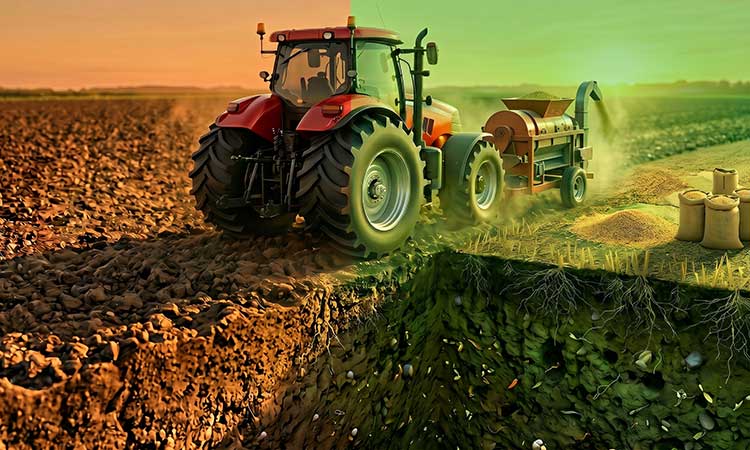
Many new farmers ask, what is soil compaction, and why does it matter? To understand the problem, you must look closely at healthy dirt. Good, rich farm dirt is not a solid block of dark material. Healthy dirt is actually fifty percent solid matter and fifty percent empty space. These tiny, empty spaces are incredibly important. They act like small tunnels that hold fresh air and clean rainwater.
When a heavy tractor tyre rolls over the field, the extreme weight squeezes the dirt together. It pushes all the empty air and water pockets completely out of the ground. The soil particles pack tightly against each other. When people ask what is compacted soil, the simple answer is that it is dirt that has lost all of its empty space. It turns from a soft sponge into a hard, solid rock. When the dirt turns into a rock, tiny plant roots cannot push through it to find deep water. Because the roots stay small and weak, the plant above the ground produces a terrible harvest.
What Causes Soil Compaction?
To fix a problem, you must know how it starts. If you want to know what causes soil compaction, you only need to look at your daily work habits. There are three main reasons your dirt turns hard.
First, heavy machine weight is the biggest cause. Modern tractors are much heavier than tractors from fifty years ago. A massive machine pushes immense force deep into the ground. Second, driving on wet dirt makes the problem much worse. Water acts like a slippery grease. When the dirt is wet, the heavy tractor weight easily slides the soil particles tightly together. Third, driving over the exact same piece of dirt too many times packs the earth down layer by layer.
While a road builder wants to know how to compact soil to build a strong, hard highway, a farmer must do the exact opposite. You must fight against the heavy weight of your machines every single day to keep your fields soft and ready for seeds.
How to Test Your Field?
You do not need to hire expensive soil compaction services to find out if your farm has a problem. You can perform a simple compaction test of soil by yourself using basic tools.
The easiest field compaction test of soil requires a simple metal rod or a long metal shovel. Walk into the middle of your field when the dirt is slightly dry. Push the metal rod straight down into the earth with your hands. If the rod slides down easily for a foot or more, your dirt is healthy and soft. If the rod stops a few inches below the surface, and you have to push with all your body weight to make it move, you have hit a hard pan. This means your compaction quality of soil is very poor, and your plant roots are likely trapped near the surface.
You can also look for clues after a heavy rainstorm. If the rainwater sits on top of your field in large puddles for several days without sinking in, your dirt is compacted.
Ways to Stop Dirt Damage
The absolute best way to handle hard dirt is to stop it from happening in the first place. You can use simple soil compaction methods and daily rules to protect your fields from the heavy weight of your machines.
Wait for the Ground to Dry
Never drive a heavy tractor onto a wet, muddy field unless it is an absolute emergency. As mentioned earlier, wet dirt crushes much faster and much deeper than dry dirt. If a heavy rainstorm hits your farm, you must have the patience to wait an extra day or two for the hot sun to dry the ground. Keeping heavy iron out of the mud is the easiest way to save your dirt.
Control Your Machine Traffic
Every time a wheel touches the dirt, it causes damage. You must limit where your tyres go. One of the best soil compaction solutions is called “controlled traffic farming.” This means you plan your driving paths carefully and always drive in the exact same tyre tracks every single year. Yes, those specific tracks will become very hard, but the rest of the field will remain completely untouched and perfectly soft for your crops.
Limit Your Heavy Loads
If you are pulling a massive wagon full of harvested grain, do not drive it across the entyre field. Empty the grain cart as soon as possible, or park the heavy trucks at the very edge of the field. The less extreme weight you drag across the soft planting dirt, the safer your farm will be.
How to Fix Hard Dirt?
If you already have a severe problem, you must take action. Many farmers want to know how to loosen compacted soil and bring their dead fields back to life. Here are the best methods for compacted soil treatment.
Use Heavy Deep Rippers
For severe problems, you must use heavy soil compaction equipment. A deep ripper is a massive steel tool that you pull behind your largest tractor. It has long, sharp metal shanks that reach deep under the hard crust of the dirt. As the tractor pulls the tool, the metal shanks shatter the hard underground brick. This lifts the dirt and opens up brand new empty spaces for air and water.
Plant Natural Cover Crops
You can also use nature to break up the hard dirt. During the winter, plant a cover crop like tillage radishes or strong clover. These specific plants grow massive, thick roots that act like natural drills. They push deep into the hard earth and break it apart. When the plants die in the spring, their thick roots rot away, leaving large, empty tunnels deep underground. This is a very cheap and natural way to fix your fields.
The Power of Good Rubber tyres
You cannot talk about protecting dirt without talking about your wheels. The only thing standing between your massive metal tractor and your delicate dirt is your rubber tyres. Finding good agricultural tyre information is critical to your success.
If you use bad, narrow tyres pumped full of high air pressure, you will destroy the earth every single time you drive into the field. The heavy weight will push down into one tiny spot and slice a deep trench into the dirt. To fix this, you must use premium agricultural tyres built to spread the weight safely.
Conclusion
Soil Compaction is a silent thief. It steals your rainwater, chokes your plant roots, and shrinks your final harvest. You cannot see it easily from the seat of your tractor, but it costs you money every single day. Farming successfully requires a smart plan to protect the earth under your feet.
By understanding the danger of wet mud, driving in straight traffic lines, and using deep rippers when necessary, you can keep your dirt soft and healthy. However, the absolute smartest choice you can make is to equip all your machines with premium TVS Eurogrip OHT tyres. From heavy field work to building a new barn, TVS Eurogrip OHT provides the exact rubber technology you need. A wide, soft tyre footprint ensures your crop soil stays loose, wet, and full of life. Protect your dirt with smart habits and great tyres, and your farm will reward you with a massive, profitable harvest.
Frequently Asked Questions (FAQs)
What is soil compaction and why is it bad?
It happens when heavy machines press the dirt down so hard that all the empty air and water pockets are squeezed out. It is bad because plant roots cannot push through the hard dirt to find water, causing the crops to stay small and weak.
How can I test my farm for hard dirt?
You can use a simple metal rod. Push the rod straight down into the dirt. If it slides in easily, your dirt is healthy. If it stops a few inches deep and you cannot push it further, you have a hard layer of compacted dirt.
How to loosen compacted soil in a large field?
The best mechanical way is to use a deep ripper tool pulled behind a massive tractor. The sharp metal shanks reach deep under the hard crust and shatter the solid dirt to let air and water back in.
Do tractor tyres really help protect the dirt?
Yes, they are incredibly important. A high-quality radial tyre from TVS Eurogrip OHT flattens out to create a wide footprint. This spreads the weight of the tractor over a large area, stopping the dirt from being crushed downward.
Why are construction tyres different from farm tyres?
Farm tyres are designed to flex and float over the dirt to keep it soft for plants. Construction tyres are designed to be stiff and strong to handle sharp rocks and help pack the dirt down tightly to build strong, safe building foundations.